


2026 Mitsubishi Pajero Returns With 480 Nm and 4WD Tech

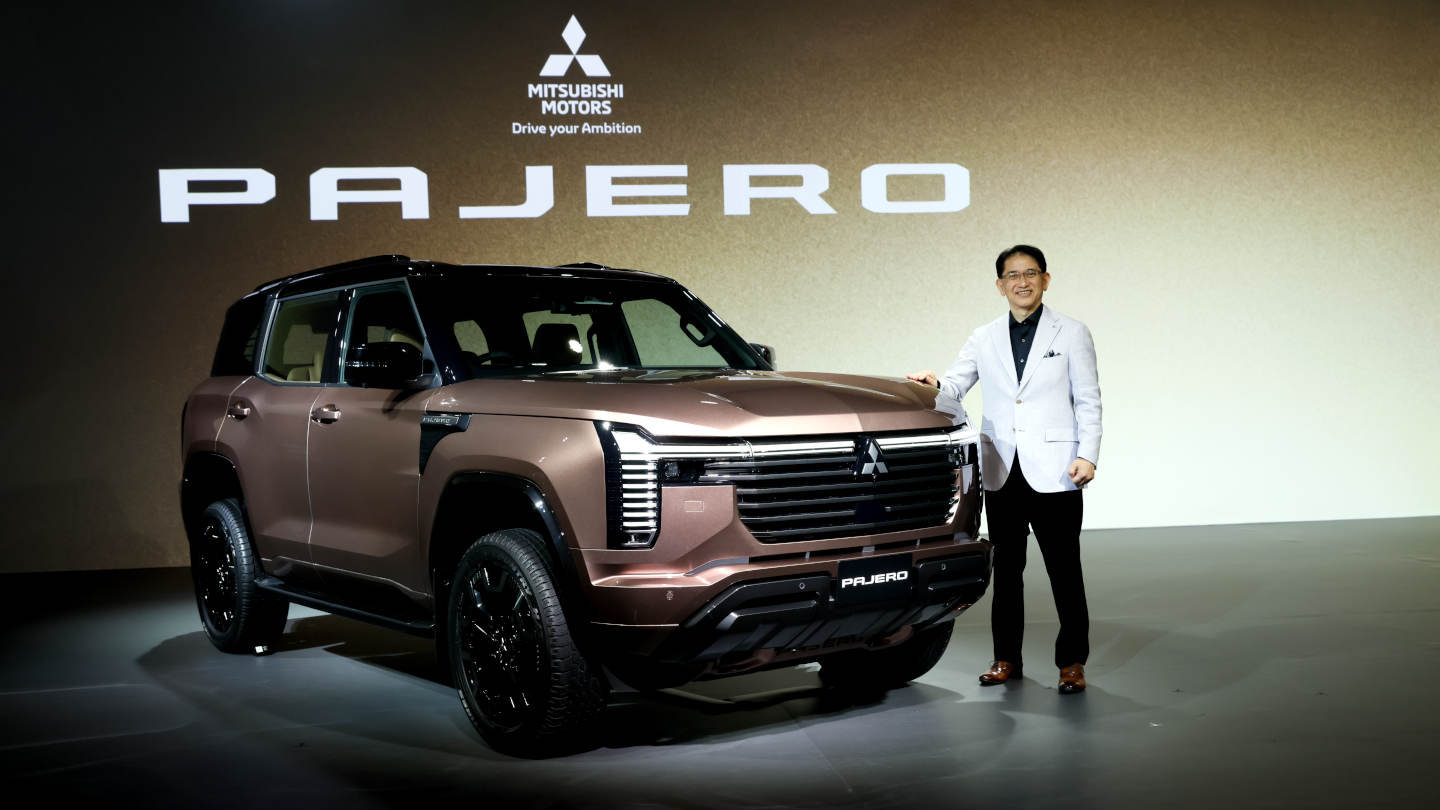
The all-new Mitsubishi Pajero has made its world premiere as a completely redesigned flagship cross-country SUV, bringing back the iconic nameplate with a new-generation ladder-frame platform, 2.4-litre clean diesel engine and advanced four-wheel-drive technology. The bigger story is that Mitsubishi has repositioned the Pajero as a premium three-row SUV while retaining the serious off-road hardware that defined its predecessors.
Built in Thailand, the new Pajero will launch first in Thailand, followed by Japan and Australia during fiscal 2026. From fiscal 2027, Mitsubishi plans to introduce it in approximately 100 countries worldwide, including markets across ASEAN, Latin America and the Middle East.
What Is New About the All-New Mitsubishi Pajero?
The new Pajero represents a complete redesign after the previous fourth-generation model's long production history. Mitsubishi says the latest SUV combines the traditional Pajero qualities of off-road confidence and reliability with greater comfort and a new emphasis on premium quality.
That positioning is important. Rather than simply reviving the old Pajero formula, Mitsubishi is presenting this generation as its new flagship model, combining rugged mechanical hardware with a substantially more sophisticated cabin and technology package.
The design remains deliberately recognisable. The upright proportions, strong horizontal lines, muscular fenders and distinctive rear treatment reference earlier Pajero generations, while modern T-shaped headlights and two available grille designs give the new model a contemporary identity.
2.4-Litre Diesel Engine Produces 480 Nm
Power comes from a newly developed 2.4-litre clean diesel engine using a wide-range single variable geometry turbocharger. Mitsubishi quotes maximum torque of 480 Nm, with the engine paired with a newly developed eight-speed automatic transmission featuring a Sport mode.
The combination is particularly relevant to the Pajero's intended role. Strong torque from a diesel engine, an eight-speed automatic and a dedicated four-wheel-drive system give the SUV the hardware needed for both highway travel and demanding terrain.
- Engine: 2.4-litre clean diesel
- Turbocharger: Single variable geometry turbocharger
- Maximum torque: 480 Nm
- Transmission: 8-speed automatic
- Transmission mode: Sport mode
- Drive system: Super Select 4WD-II
Mitsubishi notes that the 470 Nm figure applies to select specifications, meaning exact powertrain specifications can vary by market or trim.
Serious 4WD Hardware Remains Central to the Pajero
The all-new Pajero uses Mitsubishi's Super Select 4WD-II system, or SS4-II, alongside Super-All Wheel Control, known as S-AWC. This combination is central to the vehicle's off-road capability.
SS4-II provides four selectable drive configurations: 2H for rear-wheel drive, 4H for full-time four-wheel drive, 4HLc with the centre differential locked and 4LLc with the centre differential locked and low-range gearing.
S-AWC integrates several vehicle-control systems, including Active Yaw Control, Active Stability and Traction Control and ABS. Mitsubishi says the system manages driving and braking forces across all four wheels according to driver inputs and road conditions.
Seven selectable drive modes are available:
- Normal
- Eco
- Gravel
- Snow
- Mud
- Sand
- Rock
This is more than a cosmetic return to the Pajero name. The combination of a ladder frame, low-range four-wheel drive and dedicated terrain modes gives the new SUV a fundamentally different mechanical focus from a conventional road-biased crossover.
Ladder Frame and Long-Travel Suspension
The new Pajero uses a highly rigid ladder frame, with Mitsubishi increasing the use of high-tensile steel to reduce weight while increasing torsional and bending rigidity.
Suspension consists of an independent double-wishbone arrangement at the front and a newly developed five-link rigid axle at the rear. Mitsubishi says the setup has been tuned to maintain tyre contact over uneven surfaces while also providing a natural steering feel and a composed ride on paved roads.
The company's development target was what it calls “off-road comfort” — balancing the demands of rough terrain with the refinement expected from a premium SUV.
Ground Clearance and Dimensions
The all-new Mitsubishi Pajero measures 4,920mm long, 1,925mm wide and 1,910mm high, with a 2,870mm wheelbase. Ground clearance is listed at 230mm on specifications equipped with the applicable wheel and tyre combination.
- Length: 4,920 mm
- Width: 1,925 mm
- Height: 1,910 mm
- Wheelbase: 2,870 mm
- Ground clearance: 230 mm
- Front track: 1,630 mm
- Approach angle: 30.4 degrees
- Ramp breakover angle: 22.6 degrees
- Departure angle: 25.8 degrees
- Weight distribution: 52:48 front to rear
Mitsubishi specifies the approach, breakover and departure figures for vehicles equipped with 20-inch tyres. These figures underline the new Pajero's focus on genuine off-road capability rather than simply rugged styling.
Seven Seats and a More Premium Interior
The all-new Pajero adopts a three-row, seven-seat layout. Mitsubishi has paid particular attention to the third row, stating that it offers substantial headroom even for adults, while the footwell allows occupants to position their toes beneath the second-row seats.
The second row slides through a 150mm range and incorporates a tumble mechanism to improve access to the third row.
Comfort equipment includes ventilated seating and three-zone automatic climate control with independent temperature settings extending from the front seats through the third row.
Cabin quietness has also been addressed with additional sound insulation and acoustic glass for the front and rear door windows. The objective is to allow occupants to converse naturally even at highway speeds and in high-noise environments.
Dual 14.3-Inch Displays and New Pajero Multi Meter
The dashboard combines two large 14.3-inch screens into a horizontal monolithic display on the specified configuration. Mitsubishi also notes that a 12.3-inch display is used on select specifications.
One of the more distinctive elements is the Multi Meter, which modernises the triple-gauge concept associated with earlier Pajero models. It can display information such as altitude, compass direction, temperature, vehicle pitch and roll angles and AYC control status.
Wireless smartphone connectivity is supported through the Smartphone-link Display Audio system, giving occupants access to compatible navigation, music and smartphone applications.
Safety and Driver Assistance
The new Pajero gets a broad suite of preventive safety and driver-assistance technologies. These include Forward Collision Mitigation with pedestrian, cyclist and motorcyclist detection, as well as junction assist.
- Forward Collision Mitigation
- Predictive Forward Collision Warning
- Emergency Assist for Pedal Misapplication
- Emergency Lane Assist
- Front Cross Traffic Alert
- MI-PILOT highway driving assistance
- Adaptive Cruise Control
- Lane Keep Assist
- Eight airbags
- SRS centre airbag
The Emergency Lane Assist system combines forward-facing camera and radar information to identify lane markings and surrounding vehicles, then provides warnings and steering assistance when a lane-departure risk is detected.
MI-PILOT combines Adaptive Cruise Control and Lane Keep Assist to support highway driving by helping maintain following distance and lane position.
3D Camera System Adds Off-Road Visibility
The Pajero's 3D Multi Around Monitor uses four cameras and a three-dimensional vehicle model to provide a real-time view around the SUV. It is designed to assist with tight parking manoeuvres as well as off-road driving.
A particularly useful feature for serious trail driving is the front under-floor view. It allows the driver to see portions of the terrain beneath and ahead of the vehicle that would otherwise remain hidden, with the view automatically appearing when 4HLc or 4LLc is selected.
Premium Connected Features and Yamaha Audio
MITSUBISHI CONNECT adds remote functions such as checking vehicle status and operating climate control from a smartphone, along with an SOS emergency call service.
The premium cabin can also be equipped with a Dynamic Sound Yamaha Ultimate audio system developed jointly with Yamaha Corporation. It uses 12 speakers, dual amplifiers and noise-compensation technology that adjusts audio characteristics according to vehicle speed.
Price, Variants and Launch Timeline
Mitsubishi has not announced pricing in the supplied global announcement. Exact equipment can also vary by trim level and market.
The launch sequence is clearer. Production takes place in Thailand, with Thailand receiving the SUV first. Japan and Australia are scheduled to follow during fiscal 2026, which runs from April 2026 to March 2027.
From fiscal 2027 onward, Mitsubishi plans to expand the all-new Pajero to approximately 100 countries, including ASEAN, Latin America and the Middle East. Specific market launch dates, prices and trim structures have not been announced in the supplied release.
What the New Pajero Means for Buyers
The biggest change is the balance Mitsubishi is trying to achieve. The new Pajero retains the mechanical ingredients associated with serious off-roading — a ladder frame, low-range four-wheel drive, generous ground clearance and dedicated terrain modes — while adding the equipment expected from a modern premium family SUV.
For families, the seven-seat cabin, three-zone climate control, quieter interior and second-row flexibility broaden its everyday appeal. For enthusiasts, SS4-II, S-AWC, 4LLc low range and the dedicated Mud, Sand and Rock modes show that off-road ability remains fundamental rather than decorative.
What Remains Unknown?
Important market-specific information is still to come. Mitsubishi has not disclosed the retail price in this announcement, nor has it provided a complete global trim-by-trim equipment breakdown.
Power figures beyond the quoted torque figure are also not specified in the supplied release, while Mitsubishi notes that some specifications and features vary by market and trim.
For markets such as India, the launch date, pricing, engine specification, equipment levels and availability should therefore be considered unconfirmed until Mitsubishi Motors makes a market-specific announcement.
AkulRide Verdict
The all-new Mitsubishi Pajero is a significant return for one of Mitsubishi's most recognisable nameplates, but the interesting part is not simply the badge. Mitsubishi has rebuilt the Pajero around a modern premium-SUV brief without abandoning the mechanical architecture and four-wheel-drive technology that made the name important in the first place.
The 480 Nm diesel, eight-speed automatic, ladder frame, SS4-II, S-AWC and low-range gearing give the new Pajero genuine off-road credentials on paper. At the same time, seven seats, extensive driver assistance, large displays, connected services and improved cabin refinement move it firmly toward flagship family-SUV territory.
It is therefore best viewed as an evolutionary continuation of the Pajero philosophy with a substantially more premium execution. The real test will come when Mitsubishi announces market-specific pricing and specifications, but the global reveal establishes a clear direction: the Pajero is returning as a flagship SUV that intends to be as comfortable on the highway as it is capable away from it.
TAGS & TOPICS:
#Mitsubishi Pajero #Mitsubishi SUV #New Pajero #4WD SUV #Diesel SUV #Off Road SUV #Seven Seater SUV #Mitsubishi MotorsWas this helpful?
Rate this story to help us improve
User Discussion