


Toyota has officially premiered the all-new next-generation Highlander, transforming its best-selling three-row family crossover into a dedicated battery electric vehicle (BEV) offering up to 320 miles of driving range and factory-integrated NACS fast charging. For American families seeking zero-tailpipe-emission road trips without sacrificing seven-passenger capacity, this fifth-generation model represents Toyota's first locally assembled electric SUV in the United States.
Unveiled in Ojai, California, the electric Highlander marks a strategic evolution in Toyota's global multi-pathway decarbonization roadmap. By transitioning the standard Highlander nameplate entirely to electric propulsion, Toyota establishes a high-tech halo for its midsize SUV portfolio while directing traditional gasoline and hybrid shoppers toward the larger Grand Highlander.
What Is New for the Toyota Highlander?
The most consequential update is the complete retirement of combustion power for the core Highlander nameplate. The SUV has been reimagined from the ground up as a pure battery electric vehicle, becoming the fourth dedicated BEV in Toyota's North American portfolio and the brand's first three-row electric entry.
The vehicle debuts a factory-fitted North American Charging System (NACS) charge port as standard equipment, providing direct access to thousands of DC fast-charging stations and Supercharger networks across the continent without requiring cumbersome adapters. It also introduces Vehicle-to-Load (V2L) bidirectional capabilities, allowing the vehicle's high-voltage pack to supply power to external electronics, campsite equipment, or household appliances during electrical grid outages.
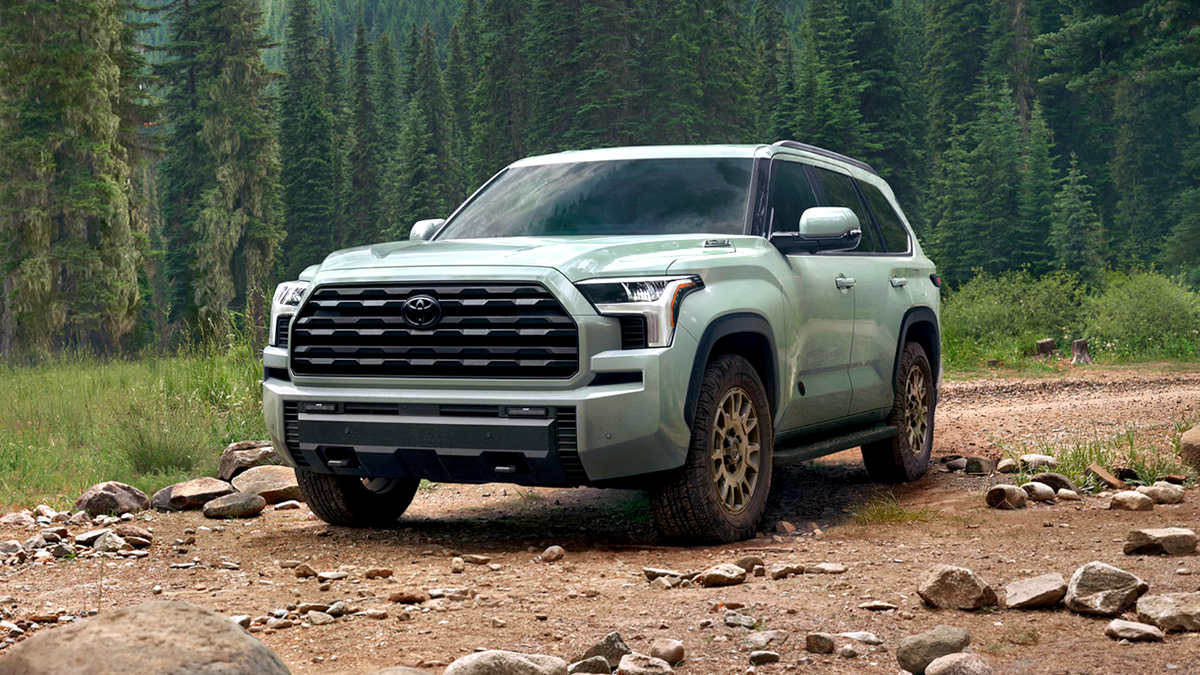
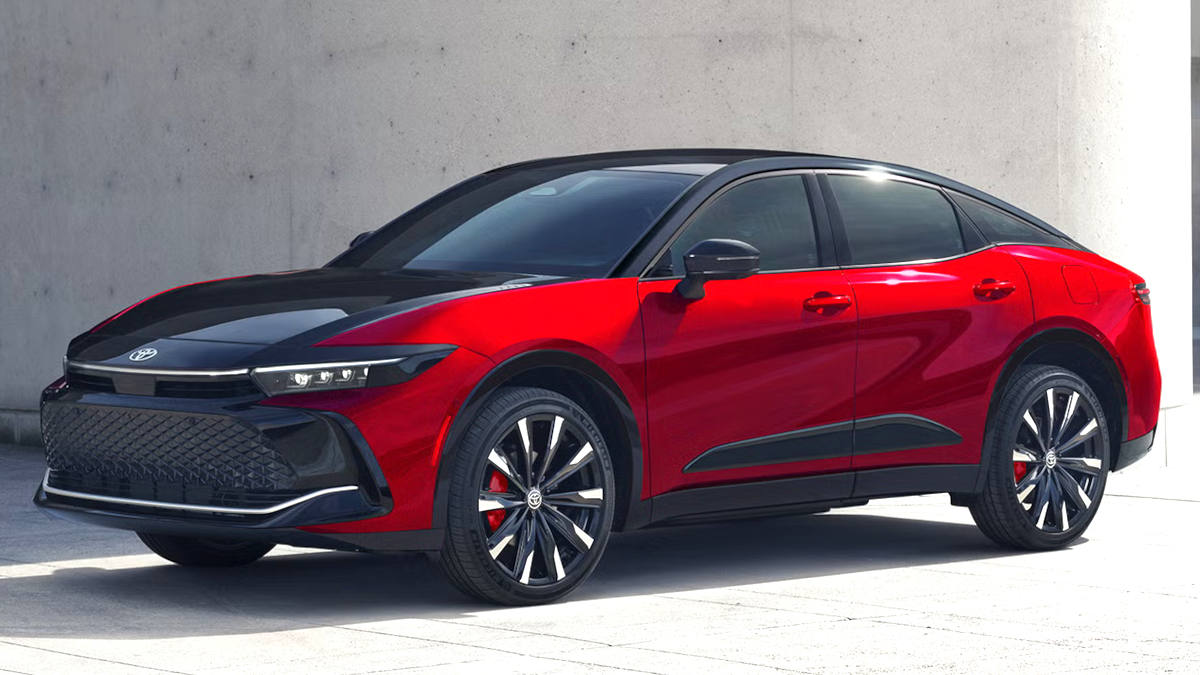
Visually, the exterior trades traditional front grilles for Toyota's modern 'Hammerhead' design language, accented by full-width LED daytime running lights, an aerodynamic closed front fascia, flush electronic door handles, and muscular rear quarter panels. A stretched 120.1-inch wheelbase ensures genuine third-row passenger room and generous storage capacity.
Key Features and Cabin Technology
Inside the cabin, the electric Highlander emphasizes contemporary ergonomics, advanced connectivity, and versatile family seating:
- Flexible Three-Row Interior: Accommodates up to seven passengers with adult-friendly second-row captain's chairs or an available bench seat, providing over 45 cubic feet of cargo space behind the second row when the third row is folded flat.
- Standard 14-Inch Infotainment: The dashboard is anchored by an expansive 14-inch Toyota Audio Multimedia touchscreen, paired with a fully digital instrument cluster, wireless Apple CarPlay, wireless Android Auto, and customizable ambient lighting.
- Vehicle-to-Load Bidirectional Power: Enables the SUV to act as a mobile power station, running power tools, camping gear, or residential backup circuits with optional bidirectional accessories.
- All-Weather Cold Preconditioning: A standard thermal preconditioning system manages cell temperatures before arriving at rapid chargers, targeting a 10 to 80 percent charge in roughly 30 minutes even in freezing ambient temperatures down to -10°C.
- All-Terrain Traction Technology: Dual-motor All-Wheel Drive variants incorporate electronic Multi-Terrain Select and Crawl Control to maintain traction across mud, sand, and snowy surfaces.
Toyota Highlander Technical Specifications
Toyota released official development targets detailing motor configurations, battery sizes, and exterior dimensions for the North American market:
- Powertrain Configurations: Single-motor Front-Wheel Drive (FWD) or dual-motor electronic All-Wheel Drive (AWD)
- Power Output: 221 horsepower on FWD models; up to 338 combined system horsepower on AWD models
- Peak Torque: 198 lb-ft on FWD; 323 lb-ft total system torque on AWD (198 lb-ft front / 125 lb-ft rear)
- Battery Options: 77.0 kWh (76.96 kWh nominal) or high-capacity 95.8 kWh (95.82 kWh nominal) lithium-ion pack
- Manufacturer-Estimated Driving Range:
- 77.0 kWh FWD (XLE): Up to 287 miles
- 77.0 kWh AWD (XLE): Up to 270 miles
- 95.8 kWh AWD (XLE and Limited): Up to 320 miles
- Charging Capabilities: Standard native NACS port; 10 to 80 percent DC fast charging in approximately 30 minutes using a 150 kW DC charger; standard 11 kW onboard AC charger
- Exterior Dimensions: Length of 198.8 inches (5,050 mm), width of 78.3 inches (1,989 mm), height of 67.3 inches (1,710 mm), and a 120.1-inch (3,050 mm) wheelbase
- Cargo Capacity: Over 45 cubic feet of flat-floor cargo storage with third-row seats folded
Price and Variants
Toyota confirmed that the electric Highlander will launch in two primary trim levels: XLE and Limited.
The entry XLE grade offers flexible customer choice, available with the 77.0 kWh battery in front-wheel or all-wheel drive, or the 95.8 kWh long-range battery with all-wheel drive. The flagship Limited grade comes exclusively equipped with the larger 95.8 kWh pack and dual-motor all-wheel drive as standard equipment.
Official base pricing, destination charges, and optional equipment packages have not yet been announced by Toyota. Window sticker details will be communicated closer to commercial production.
Launch and Production Availability
Production of the electric Highlander will take place at Toyota Motor Manufacturing Kentucky (TMMK) in Georgetown, representing a landmark vehicle as Toyota's first American-assembled electric car. High-voltage battery modules will be supplied from the newly established Toyota Battery Manufacturing North Carolina (TBMNC) facility alongside domestic partner suppliers.
Sales across North America are scheduled to commence in late 2026 for model year availability, distributed through authorized Toyota retailers nationwide.
Why It Matters for Buyers
For years, mainstream three-row family crossover buyers looking to go fully electric have faced limited choices, often forced to choose between premium luxury badges with high price tags or compact electric crossovers that lack third-row passenger space. The electric Highlander delivers legitimate three-row utility backed by Toyota's extensive dealer and servicing footprint.
Furthermore, standardizing the native NACS charge port removes the anxiety and confusion of aftermarket plug adapters, granting direct plug-and-play access to North America's most widespread charging networks. Combined with 320 miles of range and standard bidirectional power, it meets real family travel requirements.
What Remains Unknown
While Toyota has outlined the core engineering and design architecture, several practical details remain unconfirmed:
- Official base MSRP figures across XLE and Limited trims
- Final EPA-certified range and MPGe efficiency ratings
- Certified maximum towing capacity figures for both FWD and AWD configurations
- Exact Level 2 home charging hardware specifications and charge times from empty
AkulRide Verdict
The all-electric Toyota Highlander represents a calculated, highly significant transition for one of the auto industry's most trusted nameplates. Rather than introducing an unfamiliar sub-brand badge, Toyota has applied its electric architecture directly to a vehicle that American suburban households have relied upon for twenty-five years.
With up to 338 horsepower, an estimated 320-mile range, native NACS convenience, and local Kentucky assembly, the electric Highlander enters the three-row family market with immense credibility. If Toyota pairs this well-proportioned SUV with competitive showroom pricing, it will quickly become a benchmark in the electric family segment.
User Discussion