


Audi A2 e-tron Production Starts: The Most Efficient Audi Ever Built

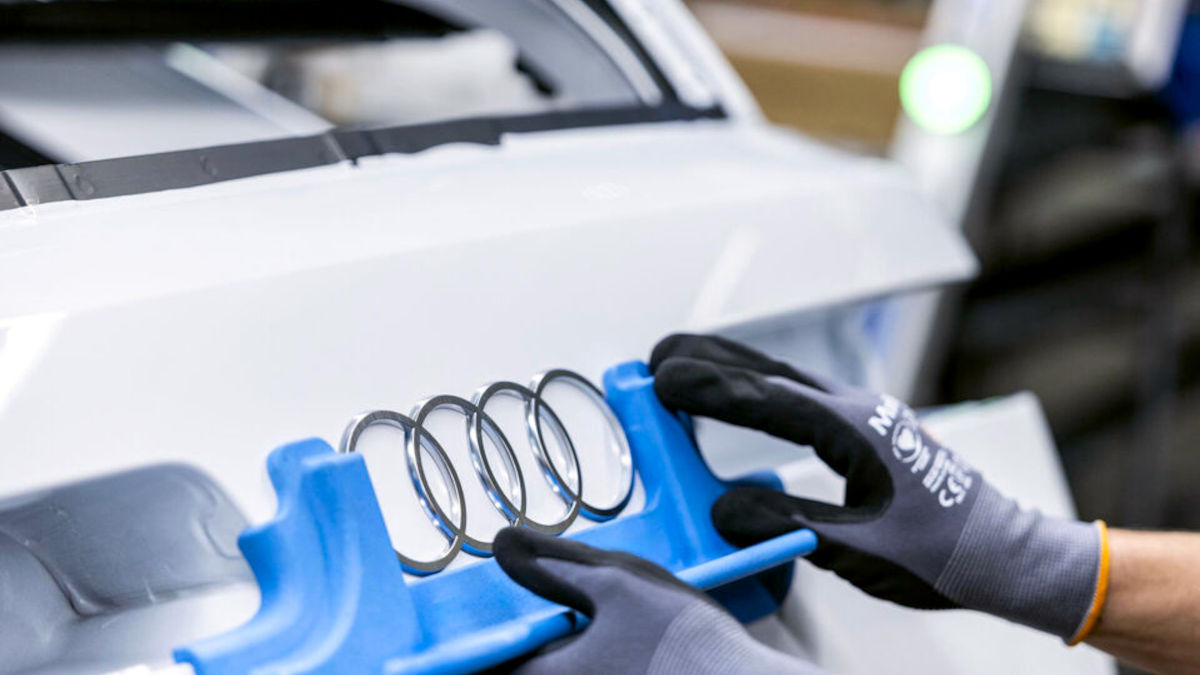
Audi Accelerates EV Strategy with Ingolstadt Production Launch
In a major milestone for European electric vehicle manufacturing, Audi has officially commenced series production of the all-new A2 e-tron at its Ingolstadt headquarters. The launch marks a radical shift in how the German premium brand develops and builds cars, with the A2 e-tron moving from concept to production-ready 21 months faster than previous vehicle projects.
For buyers seeking an entry point into premium electric mobility, this is a significant development. By drastically streamlining its development cycle and prioritizing outright aerodynamic and electrical efficiency over raw battery size, Audi is demonstrating a clear strategy to combat cheaper import rivals while keeping manufacturing localized in Germany.
What Is New?
The core announcement centers on the transformation of Audi's production capabilities alongside the rollout of its most efficient vehicle to date. The A2 e-tron is positioned as a compact, everyday electric vehicle specifically tailored to the European market.
To make domestic production viable and profitable, Audi has overhauled its Ingolstadt plant. The facility now utilizes the "string-of-pearls" production principle to minimize complexity and reduce the physical footprint required for parts logistics. Furthermore, the assembly line relies heavily on the "Edge Cloud 4 Production" system, employing AI knowledge assistants, fully automated wheel installation, and intelligent camera-guided "bin picking" for body components.
Key Features
The A2 e-tron brings a host of practical, efficiency-focused technologies to the premium compact segment.
- Extreme Efficiency: By utilizing advanced aerodynamics, including aero wheels, gap reducers, and a largely enclosed underbody, the vehicle achieves a drag coefficient of just 0.24.
- Bidirectional Charging: The vehicle supports Vehicle-to-Load (V2L) capabilities, allowing owners to power external devices like e-bikes or appliances directly from the car's battery. In select markets like Germany, Austria, and Switzerland, Vehicle-to-Home (V2H) functionality is also supported.
- Smart Manufacturing: The integration of cloud-controlled operator guidance ensures high build quality while lowering assembly costs.
- Simplified Configurations: Audi intentionally reduced the number of production-relevant part numbers, simplifying the purchasing process for consumers and manufacturing logistics for the brand.
Specifications
Built upon a modified iteration of the Volkswagen Group's MEB platform, the A2 e-tron utilizes a rear-wheel-drive architecture.
- Motor and Power: Available in four power levels ranging from 125 kW (167 hp) up to 240 kW (322 hp).
- Battery Options: Three capacities are offered. The 52 kWh and 61 kWh packs use cost-effective Lithium Iron Phosphate (LFP) chemistry, while the flagship 84 kWh pack utilizes energy-dense Nickel Manganese Cobalt (NMC) cells.
- Range: The 84 kWh variant achieves a maximum WLTP driving range of up to 646 kilometers.
- Energy Consumption: When equipped with the optional efficiency package, the 140 kW variant achieves an industry-leading consumption rate of just 12.8 kWh per 100 kilometers.
- Charging: The 84 kWh NMC battery supports DC fast charging up to 183 kW, enabling a 10 to 80 percent charge in approximately 29 minutes.
- Performance: The top-tier 240 kW model accelerates from 0 to 100 km/h in 5.7 seconds.
Price and Variants
Audi has confirmed that pricing for the A2 e-tron will start at €38,000 in the German home market. Buyers can choose from four distinct powertrain outputs—125 kW, 140 kW, 170 kW, and 240 kW—allowing them to prioritize either absolute efficiency, maximum range, or stronger acceleration.
Launch and Availability
With series production officially underway as of September 2026, the order books for the A2 e-tron will open in the fall. The first customer deliveries across Europe are scheduled to begin in December 2026. The vehicle is currently targeted at the European market.
Why It Matters for Buyers
The €38,000 entry price combined with class-leading 12.8 kWh/100 km efficiency means the A2 e-tron is poised to deliver exceptionally low day-to-day running costs. For consumers, Audi's decision to offer cheaper LFP batteries on base trims makes premium electric mobility far more accessible without sacrificing the brand's trademark build quality. Moreover, the inclusion of V2L technology adds a layer of lifestyle practicality rarely seen in entry-level European premium EVs.
What Remains Unknown
While the German starting price is confirmed, Audi has not yet detailed the exact pricing structure for the higher-tier 170 kW and 240 kW variants, nor how much the optional efficiency package will cost. Additionally, full interior dimensions, including exact boot capacity, remain undisclosed at this stage.
AkulRide Verdict
The production launch of the Audi A2 e-tron is a highly strategic and genuinely important move for the brand. By drastically cutting 21 months off the development time and implementing highly automated, cost-effective manufacturing techniques in Ingolstadt, Audi is proving it can adapt to the rapid pace of the modern EV market. The A2 e-tron is evolutionary in its underlying MEB architecture but revolutionary in its approach to aerodynamic efficiency and manufacturing agility. If the real-world range figures hold true to the WLTP claims, this compact EV will be a formidable competitor in Europe.
TAGS & TOPICS:
#Audi A2 e-tron #Audi EV #MEB Platform #Compact Electric Cars #Electric Vehicle Production #V2L Technology #LFP BatteryWas this helpful?
Rate this story to help us improve
User Discussion