


Benda Rock 707 Middleweight Cruiser Debuts With Auto-Clutch and Air Suspension

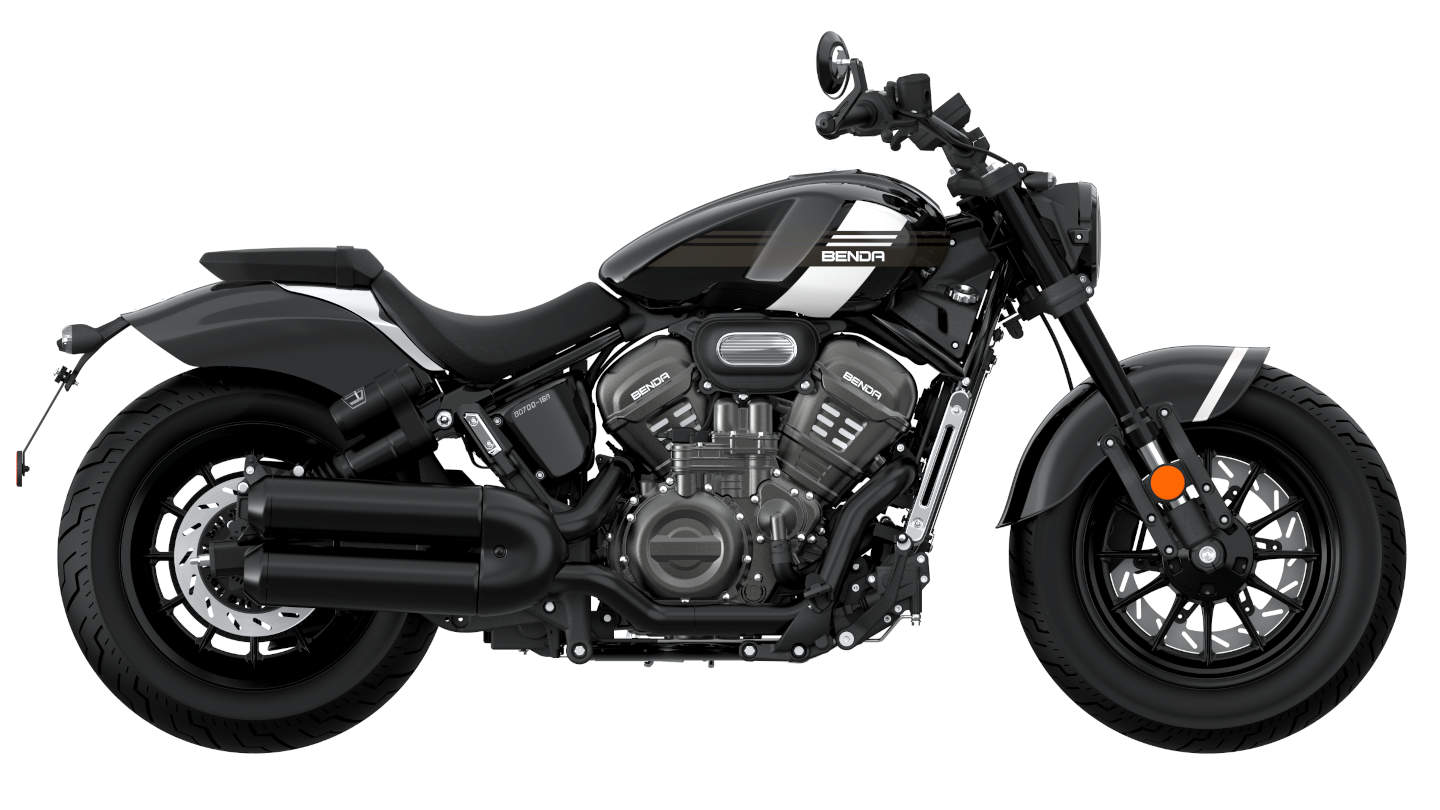
Chinese motorcycle manufacturer Benda has officially introduced the Rock 707 cruiser for European markets, featuring an advanced adaptive air suspension system and an electronic clutch. By combining traditional V-twin cruiser styling with modern rider-assist technology, the new middleweight model aims to simplify low-speed handling and urban riding without sacrificing traditional cruiser aesthetics.
Positioned as a major addition to Benda's growing Rock family, the motorcycle introduces features rarely seen in the middleweight segment. Here is an in-depth editorial breakdown of what the Benda Rock 707 offers, its technical specifications, and what it means for cruiser enthusiasts.
What Is New for the Benda Rock 707?
The headline updates for the Benda Rock 707 center on its electronic chassis and drivetrain technology. Rather than relying on traditional mechanical setups, Benda has equipped the motorcycle with automated systems designed to improve comfort and rider confidence during everyday use.
The core highlights of the Benda Rock 707 include:
- Adaptive Air Suspension: A dual-chamber electronic rear air suspension system that automatically lowers the motorcycle's ride height when coming to a stop.
- BEC MK-III Electronic Clutch: An automated clutch system that enables leverless gear shifting and smooth stops while preserving full manual control.
- Liquid-Cooled V-Twin Engine: A 692cc Euro 5+ compliant powertrain tuned specifically for low-end torque and mid-range performance.
- Belt Final Drive: Smooth and low-maintenance power delivery to the rear wheel.
- Modern Electronics Suite: Standard traction control, dual-channel ABS, electronic throttle, cruise control, and a high-brightness TFT display.
Engine and Transmission: Auto-Clutch V-Twin Performance
At the heart of the Benda Rock 707 is a liquid-cooled 692cc 8-valve V-twin engine. Delivering 73.4 PS (54 kW) at 9,000 rpm and 68 Nm of peak torque at 6,500 rpm, the engine is calibrated to deliver immediate low-end pulling power suited for highway cruising and city navigation alike.
Power is routed to the rear wheel through a six-speed transmission and a clean belt drive system. The powertrain complies with Euro 5+ emissions regulations, recording official CO2 emissions of 125 g/km.
The standout drivetrain feature is Benda's proprietary BEC MK-III (Benda Electronic Clutch) system. Utilizing dual-motor redundancy alongside a slipper clutch, the system allows riders to launch, change gears, and bring the motorcycle to a complete stop without touching the handlebar-mounted clutch lever. For riders who prefer conventional operation, the mechanical clutch lever remains functional for full manual override at any moment.
Chassis and Suspension: Adaptive Ride Height Technology
The chassis architecture pairs a tubular steel cradle frame with a lightweight aluminum swingarm. Up front, non-adjustable upside-down (USD) front forks provide 130 mm of travel to cushion road impacts.
The primary innovation resides at the rear, where traditional coil springs are replaced by dual-chamber electronic air suspension units. The system continuously monitors load conditions and automatically alters rear ride height. When the motorcycle slows to a standstill, the system lowers the rear chassis by up to 30 mm, reducing seat height from its upper limit of 720 mm down to 690 mm.
This automatic lowering mechanism makes it significantly easier for riders of varying heights to plant both feet firmly on the ground when stopping at intersections or maneuvering in tight parking spaces. Once the motorcycle accelerates, the suspension returns to its nominal riding height of 705 mm or up to 720 mm.
Braking is handled by a single 320 mm front disc clamped by a radial four-piston caliper, complemented by a 260 mm rear disc with a two-piston caliper. Standard safety systems include dual-channel ABS and a Traction Control System (TCS).
Technology, Ergonomics, and Utility
Rider interface functions are managed via a 3.6-inch TFT color instrument display featuring an 800-nit brightness rating and a 120-degree viewing angle for enhanced readability in direct sunlight. Electronic throttle control allows for precise throttle response and enables standard cruise control for relaxed long-distance riding.
The motorcycle rides on 16-inch alloy wheels fitted with a 150/80-16 front tire and a wide 180/65-16 rear tire, reinforcing its low-slung bobber stance. Cockpit convenience is further enhanced by integrated USB and Type-C charging ports to keep mobile devices powered on the go.
For added practicality, the two-piece seat configuration offers built-in modularity. The rear pillion pad can be removed and retrofitted with an optional chrome-plated aluminum luggage rack to transform the motorcycle into a single-seater cargo cruiser.
Specifications Overview
Official technical specifications for the Benda Rock 707 include:
- Engine: 692cc liquid-cooled V-twin, 8-valve DOHC
- Maximum Power: 73.4 PS (54 kW) @ 9,000 rpm
- Maximum Torque: 68 Nm @ 6,500 rpm
- Transmission: 6-speed with BEC MK-III Electronic Clutch
- Final Drive: Belt drive
- Front Suspension: Upside-down (USD) telescopic fork (130 mm travel)
- Rear Suspension: Dual-chamber electronic air suspension (50 mm travel, 30 mm height adjustment)
- Seat Height: 690 mm to 720 mm (705 mm nominal)
- Brakes: 320 mm front single disc (4-piston radial caliper), 260 mm rear single disc (2-piston caliper) with ABS & TCS
- Tyres: 150/80-16 (Front) / 180/65-16 (Rear)
- Curb Weight: 235 kg
- Fuel Tank Capacity: 16 litres
- Display: 3.6-inch color TFT display (800 nit)
Pricing, Trims, and Market Availability
The Benda Rock 707 is rolling out across European dealerships starting in mid-September 2026. Benda offers the motorcycle in four distinct exterior finishes: Knight Black, Sandy Gray, Windy White, and Armor Green.
In select European markets such as France, official pricing for the Rock 707 starts at €9,990 including tax. Final retail pricing and color availability will vary depending on regional import channels and distributor networks across individual European countries.
Why It Matters for Motorcycle Buyers
Middleweight cruisers are often chosen by urban commuters and touring enthusiasts alike, but managing a 235 kg motorcycle in stop-and-go traffic can be physically demanding. The inclusion of an electronic auto-clutch eliminates fatigue from repeated clutch pulls during heavy congestion while preventing engine stalls during sudden stops.
Furthermore, adaptive air suspension addresses a common hurdle for shorter riders by reducing seat height at standstill. By democratizing technology usually reserved for flagship adventure-tourers and luxury cruisers, Benda provides a feature-rich alternative to conventional middleweight Japanese and European offerings.
What Remains Unknown
While European technical specifications and initial rollout schedules have been detailed, several key pieces of information remain unannounced:
- Official availability and release plans for non-European export markets, including North America and Asia.
- Country-by-country pricing structures across all European union territories outside France.
- Detailed user-definable customization options for the rear air suspension damping modes.
AkulRide Verdict
The Benda Rock 707 is a technologically ambitious entry in the middleweight cruiser category. Rather than relying solely on retro styling, Benda has integrated practical electronic rider aids—specifically adaptive height air suspension and an electronic clutch—that solve real-world usability challenges for cruiser riders.
Provided long-term durability and dealer support meet consumer expectations, the Rock 707 represents an intriguing, value-focused proposition for riders seeking modern convenience in a classic V-twin package.
TAGS & TOPICS:
#Benda Rock 707 #Middleweight Cruiser #VTwin Engine #Electronic Clutch #Adaptive Air Suspension #Benda Motor #Cruiser MotorcycleWas this helpful?
Rate this story to help us improve
User Discussion