


Hyundai Bayon Confirmed for India: Key Details and Tech

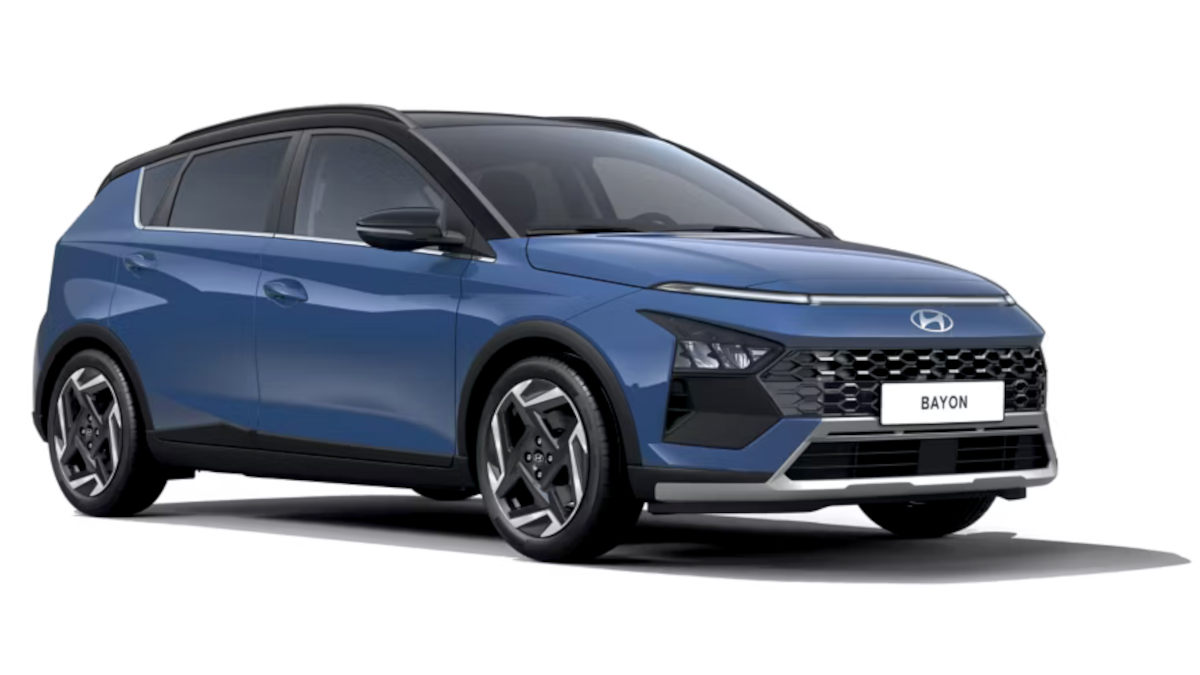
Hyundai Motor India has officially confirmed the introduction of the Bayon nameplate for the Indian market, releasing initial design sketches ahead of its scheduled festive season arrival. The announcement marks an important expansion of the carmaker's local lineup, aiming to capture buyers looking for an urban crossover positioned between the sub-four-metre Venue and the larger Creta.
With customer interest registrations now open, Hyundai is preparing to enter a fast-growing niche that bridges traditional hatchbacks and compact SUVs. Here is an in-depth breakdown of what is confirmed, what global specifications reveal, and what Indian buyers can expect.
What Is the Hyundai Bayon?
Originally introduced in European markets, the Bayon takes its name from the French city of Bayonne. In international markets, the vehicle functions as an agile B-segment crossover designed for dense urban environments.
For India, Hyundai is bringing the global badge to introduce what it calls an Intelligent Utility Vehicle. The model represents a new design direction for the brand in India, blending elevated ride height with progressive styling and daily versatility.
Confirmed Exterior Design and the Art of Steel Language
The design sketches officially released by Hyundai Motor India showcase the brand's evolving Art of Steel design philosophy. The front fascia displays a wide, planted stance characterized by a sculpted bonnet and muscular front fender lines.
A notable exterior highlight is the H-Edge lighting signature, which features an uninterrupted horizontal daytime running light bar spanning the width of the front. The main headlamp clusters are positioned lower in the front bumper, flanked by an assertive lower air dam and protective skid plates.
Along the profile, sharp character lines create an energetic wedge-like profile. Prominent body cladding around the wheel arches and lower door sills emphasizes its rugged character. At the rear, boomerang-inspired vertical LED taillights are connected by a slim light bar, providing a wide visual footprint.
Cabin Tech and Interior Expectations
While Hyundai has not yet showcased the finalized cabin of the India-spec production car, the European-specification Bayon provides a clear preview of the digital layout and equipment standards.
In global guise, the Bayon features a tech-focused cockpit centered on dual 10.25-inch displays. One screen serves as a fully digital, configurable instrument cluster, while the second handles infotainment, navigation, and vehicle settings.
Key convenience and connectivity features found on the global platform include:
- Wireless Apple CarPlay and Android Auto integration
- Hyundai Bluelink connected-car telematics with over-the-air software updates
- Multi-colour ambient cabin LED lighting
- Wireless smartphone charging pad and multiple USB-C ports
- Premium multi-speaker audio system
If Hyundai brings a comparable dashboard layout to India, the Bayon will offer one of the most technologically advanced cabins in its expected price bracket.
Powertrain and Mechanical Specifications
Hyundai Motor India has not officially confirmed the engine lineup or transmission choices for the Indian market. However, technical data from the global model illustrates the mechanical foundation of the platform.
In Europe, the Bayon is powered by a 1.0-litre T-GDi three-cylinder turbocharged petrol engine equipped with 48-volt mild-hybrid technology. This setup produces 100 PS of power and 172 Nm of torque, mated to either a six-speed intelligent manual transmission or a seven-speed dual-clutch automatic transmission.
For the Indian market, Hyundai is widely expected to customize the powertrain strategy for local conditions and cost targets. Industry observers anticipate that the brand may utilize its proven 1.2-litre four-cylinder naturally aspirated petrol engine for entry variants, alongside a punchier 1.0-litre turbo-petrol unit for higher trims. A factory-fitted CNG option is also under discussion, though Hyundai has not officially verified local powertrain details.
Dimensions and Cargo Practicality
The European-spec Hyundai Bayon measures 4,180 mm in length, 1,775 mm in width, and 1,500 mm in height, with a generous 2,580 mm wheelbase. Ground clearance ranges between 165 mm and 183 mm depending on wheel size, which spans from 15-inch steel wheels up to 17-inch alloys.
Boot capacity on the global model stands at 411 litres with all seats in place, expanding to 1,205 litres when the 60:40 split rear seats are folded flat. If these proportions carry over to the Indian version, the Bayon will deliver luggage space that comfortably surpasses most sub-four-metre SUVs.
Safety Features and Driver Assistance
Safety has become a priority for Indian car buyers, and the Bayon's underlying architecture is built to support advanced protective systems. Internationally, the vehicle comes equipped with the Hyundai Smart Sense active safety package.
Standard and optional global safety features include:
- Forward Collision-Avoidance Assist with vehicle, pedestrian, and cyclist detection
- Lane Keeping Assist and Lane Following Assist
- Blind-Spot Collision-Avoidance Assist
- Rear Cross-Traffic Collision-Avoidance Assist
- Driver Attention Warning and Leading Vehicle Departure Alert
- Six airbags, electronic stability control, and hill-start assist
For the Indian rollout, six airbags and core electronic stability controls are expected as standard equipment, with Level 1 or Level 2 advanced driver assistance systems likely reserved for top-spec trims.
Market Positioning, Expected Price, and Variants
Hyundai has not yet revealed official pricing or the variant hierarchy. However, the commercial positioning of the vehicle is clear: it will slot directly between the Venue and the Creta.
This placement allows Hyundai to establish a continuous SUV ladder spanning Exter, Venue, Bayon, Creta, and Alcazar. The Bayon will directly target crossover competitors such as the Maruti Suzuki Fronx and Toyota Urban Cruiser Taisor, while providing an alternative to sub-four-metre compact SUVs. Estimated pricing is expected to start around 8.5 lakh rupees and reach up to 14 lakh rupees ex-showroom, depending on the final engine and transmission mix.
Launch Timeline and Booking Status
Hyundai Motor India has initiated its pre-launch campaign by opening the registration of interest on its official website. The complete market introduction is slated for the festive season, with pricing announcements and commercial deliveries expected to follow closely.
Official booking windows and token amounts have not yet been announced by the manufacturer.
Why the Bayon Matters for Indian Car Buyers
The arrival of the Bayon gives buyers an alternative to traditional, upright compact SUVs without forcing them to step up to the size and cost of a midsize vehicle like the Creta. With its distinctive crossover silhouette, low-slung roofline, and modern tech, it appeals directly to urban commuters who prioritize style, maneuverability, and premium cabin appointments.
What Remains Unknown
While the design sketches and nameplate confirmation provide valuable clues, critical details remain under wraps until Hyundai issues further updates:
- The exact engine displacement, power output, and fuel choices for India
- Whether the Indian model will retain the full 4,180 mm length or undergo minor dimensional adjustments
- The finalized trim names and standard feature distribution
- Official fuel efficiency ratings
- Confirmed ex-showroom pricing across all variants
AkulRide Verdict
The introduction of the Hyundai Bayon in India is a strategically sound move. Instead of cluttering existing model lines, Hyundai is deploying a proven global nameplate to address the whitespace between subcompact and midsize utility vehicles. If the production car delivers on the striking design shown in the sketches and backs it up with competitive pricing, the Bayon has the potential to become a compelling option for modern urban car buyers.
TAGS & TOPICS:
#Hyundai Bayon #Compact SUV #Hyundai India #Urban Crossover #Turbo Petrol #B Segment SUV #Indian Car LaunchWas this helpful?
Rate this story to help us improve
User Discussion