


The Hyundai Elantra Hybrid continues to redefine what budget-conscious commuters can expect from an electrified compact sedan, combining sharp styling with genuine dual-clutch driving engagement. For buyers navigating escalating fuel prices and seeking an alternative to noisy continuously variable transmissions, Hyundai's dedicated hybrid setup delivers both efficiency and genuine mechanical refinement.
Global specifications published by Hyundai confirm that the Elantra Hybrid pairs a Smartstream petrol engine with an electric motor capable of propelling the car purely on electric power at speeds of up to 120 km/h under optimal conditions. Rather than treating hybridization as merely an economy exercise, the brand has preserved an authentic driving feel by utilizing a 6-speed dual-clutch gearbox instead of a CVT.
What Is New Under the Skin?
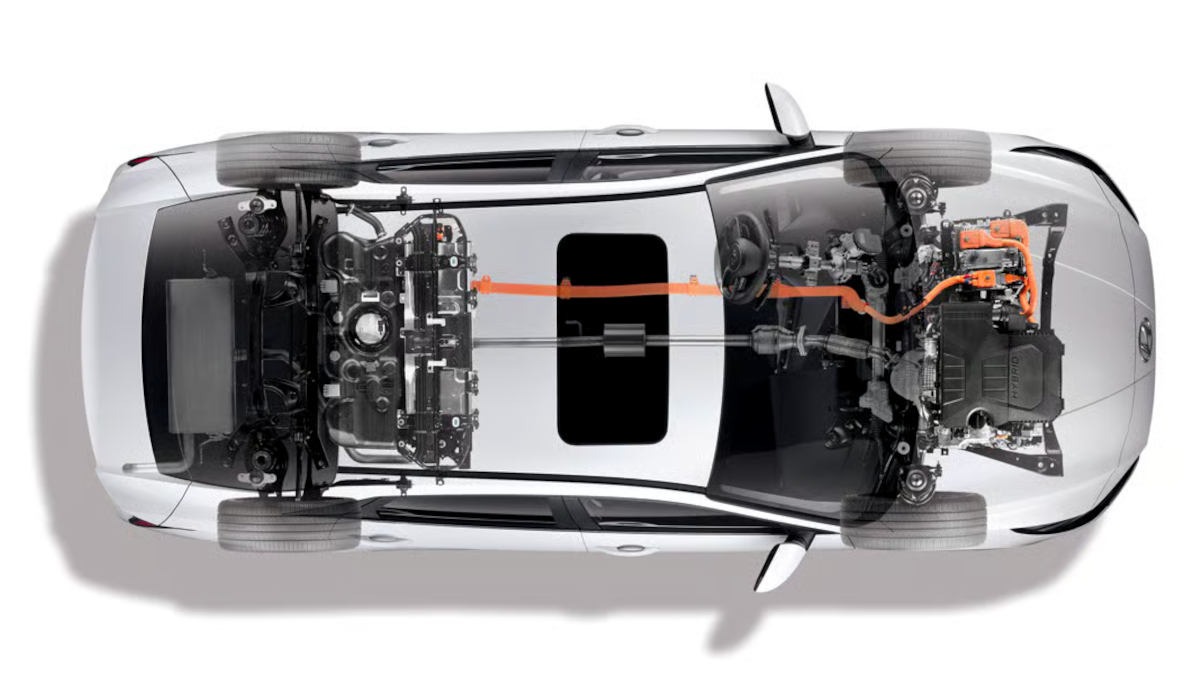
The core proposition of the Hyundai Elantra Hybrid lies in its tightly integrated parallel hybrid architecture. Unlike traditional hybrids that lean on power-split or belt-driven planetary systems, the Elantra uses an electric motor sandwiched between the internal combustion engine and a quick-shifting 6-speed transmission.
Hyundai has also optimized vehicle packaging by mounting the high-voltage battery pack directly beneath the rear passenger bench. This configuration keeps luggage capacity virtually intact and lowers the sedan's center of gravity, which aids chassis stability on winding roads.
Key Features and Cabin Technology
Inside, the Elantra Hybrid retains the driver-focused cockpit layout that characterizes the current-generation Elantra lineup, centered around a distinctive aircraft-style grab bar along the center console.
Equipment highlights confirmed across international specifications include:
- Dual 10.25-inch panoramic screens housing the digital driver display and infotainment navigation system beneath a single piece of glass
- Comprehensive Hyundai SmartSense driver assistance suite, including Forward Collision-Avoidance Assist, Lane Keeping Assist, and Blind-Spot Collision-Avoidance Assist
- Rear Cross-Traffic Collision-Avoidance Assist and Smart Cruise Control with stop-and-go capability
- Wireless smartphone integration alongside high-speed induction charging pads
- Multi-link rear suspension engineered to balance battery mass with composed ride comfort
- Regenerative braking setup engineered to blend kinetic energy recovery smoothly into hydraulic friction braking
Engine, Battery, and Technical Specifications
Hyundai’s global hybrid powertrain combines a dedicated thermal-efficiency Atkinson-cycle petrol motor with an electric traction system. The resulting numbers yield a balanced blend of city sprint capability and sustained highway cruising manners.
- Internal Combustion Engine: Smartstream 1.6-litre GDI 4-cylinder petrol engine
- Petrol Engine Output: 105 PS at 5,700 rpm and 15.0 kg-m (147 Nm) of torque at 4,000 rpm
- Electric Motor: Permanent magnet synchronous motor (PMSM) producing 32 kW (approximately 43.5 PS) and 170 Nm of torque
- Combined Total System Output: 139 PS (102 kW) and 264 Nm of system torque
- Traction Battery: 1.32 kWh lithium-ion polymer battery pack operating at 240 volts
- EV Mode Cruising: Capable of pure electric vehicle operation at speeds up to 120 km/h depending on battery charge and throttle load
- Transmission: 6-speed EcoShift dual-clutch transmission (DCT) with front-wheel drive
Price and Variants
Specific trim names and pricing structures vary significantly according to regional distributor networks. In primary markets such as North America and the Middle East, the model is sold across multiple tiers ranging from high-efficiency entry grades to comprehensively equipped luxury trims.
Hyundai has not announced a single global uniform price point, as regional taxes, import tariffs, and local equipment packages dictate regional showroom costs. Prospective buyers must consult authorized domestic distributors for confirmed market pricing.
Launch and Market Availability
The Elantra Hybrid is actively in production across Hyundai’s international manufacturing hubs, serving markets throughout North America, parts of Asia, and the Middle East.
Order books and delivery timelines depend heavily on regional allocations. Right-hand-drive markets and territories where compact sedans face intense SUV cannibalization currently see varying levels of availability, with select countries reserving the hybrid strictly by order allocation.
Why It Matters for Buyers
For decades, opting for an affordable hybrid sedan meant settling for the distinct "rubber-band" sensation and high-rpm engine drone typical of e-CVT transmissions. The Elantra Hybrid stands apart by preserving the physical stepped gear shifts of a 6-speed dual-clutch automatic.
When quick passing power is required, the transmission kicks down predictably while the 170 Nm electric motor supplies immediate low-end torque. Furthermore, preserving rear boot volume by stowing the 1.32 kWh battery under the rear seat ensures that family road trips and airport runs are not compromised by hybrid hardware.
What Remains Unknown
While the mechanical blueprint and feature list are fully documented on Hyundai’s global platform, several specific market questions remain open. Hyundai has not published definitive plans regarding potential right-hand-drive expansion for markets that previously discontinued the petrol Elantra.
Additionally, while the electric motor supports speeds up to 120 km/h, Hyundai has not published an official laboratory figure for the maximum continuous distance achievable solely on electric energy during real-world suburban commuting.
AkulRide Verdict
The Hyundai Elantra Hybrid demonstrates that sensible fuel efficiency does not require abandoning dynamic driving pleasure or aggressive exterior design. By wedding a proven 1.6-litre Atkinson-cycle petrol motor to a responsive 6-speed dual-clutch gearbox, Hyundai has produced a cohesive commuter that avoids the sterile driving dynamics common to mainstream electrified sedans.
While it is an evolutionary refinement rather than an all-new platform leap, its combination of 120 km/h EV capability, generous cabin technology, and uncompromised trunk utility makes it an exceptionally compelling pick for sedan loyalists seeking low operating costs.

User Discussion