



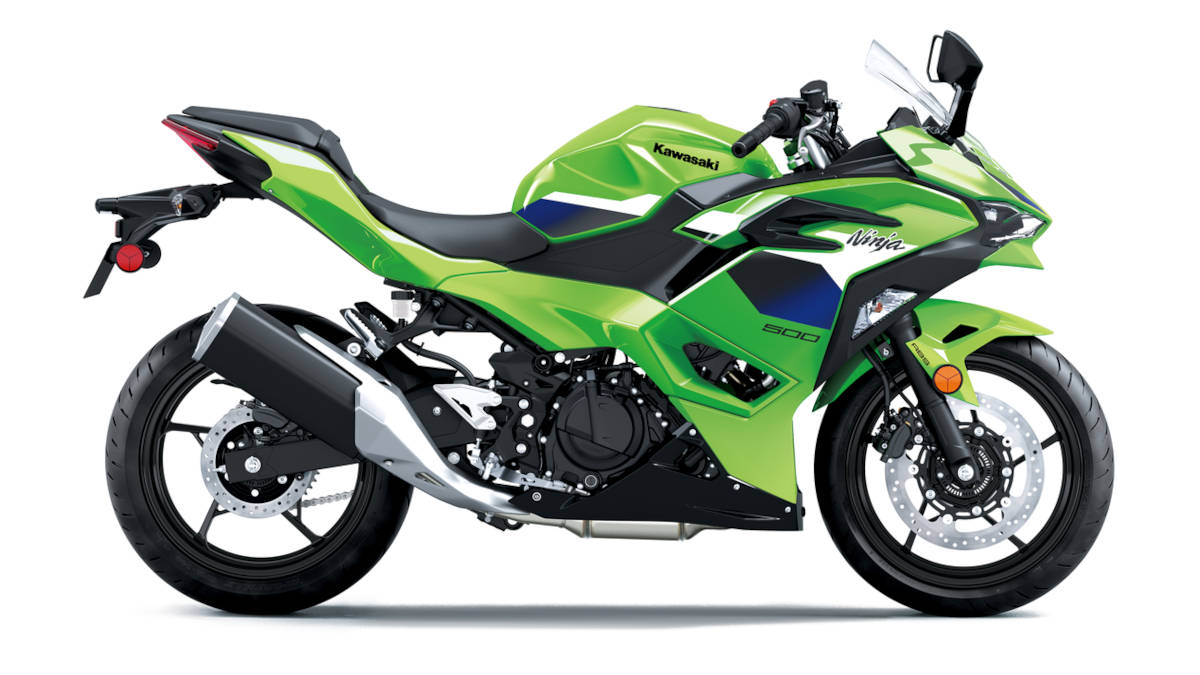
The middleweight sportbike segment in India just got a fresh dose of green. Kawasaki has rolled out the 2026 Ninja 500, and at ₹5,76,000 ex-showroom, it's positioned right at the sweet spot between affordable commuters and full-blown superbikes.
For riders eyeing their first "real" sportbike, this update matters more than a simple facelift. Kawasaki hasn't just touched up the bodywork — it's refined the riding experience on a platform that already had a strong reputation.
Key Features
- Flowing, layered fairing design with a redesigned twin-headlight "face"
- Trellis frame styled after the flagship Ninja H2, using rigid engine mounting
- Relaxed, sport-tourer-friendly riding triangle for longer comfort
- Smartphone connectivity via Kawasaki's Rideology app for ride logs and notifications
- Assist & Slipper clutch borrowed from race-bred technology
- ABS as standard for confident braking in all conditions
That last point about the riding position deserves attention. Kawasaki has deliberately avoided the wrist-crushing stance of some rivals, which makes the Ninja 500 far more livable for daily commutes, not just weekend track days.
Specifications: Engine, Performance & Chassis
Engine & Performance
- Engine: 451cc, liquid-cooled, parallel-twin, DOHC
- Power: 45 PS at 9,000 rpm
- Torque: 42.6 Nm at 6,000 rpm
- Gearbox: 6-speed with chain final drive
- Claimed fuel efficiency: roughly 26 km/l (3.8 l/100km)
This twin-cylinder setup is tuned to deliver power across the entire rev range rather than just up top. That means usable grunt for city traffic and enough top-end pull for confident highway overtakes.
Chassis, Brakes & Weight
- Curb weight: 171 kg (dry weight: 157 kg)
- Front brake: 310mm semi-floating disc — the same diameter used on the flagship Ninja ZX-14R
- Rear brake: 220mm disc
- Suspension: Telescopic fork (front), Uni-Trak with preload adjustment (rear)
- Seat height: 785 mm
- Fuel tank: 14 litres
That trellis frame and sub-160kg dry weight combination is what really separates this from heavier middleweight rivals. Lighter weight translates directly into easier low-speed maneuvering and more confidence-inspiring handling for newer riders.
Pricing & Market Launch
The 2026 Ninja 500 is priced at ₹5,76,000 ex-showroom in its Lime Green colourway, continuing Kawasaki's signature livery for the Ninja lineup. The bike is currently listed on Kawasaki India's official configurator, with availability through the brand's dealer network across the country.
Interested buyers can already book test rides and request quotes directly through Kawasaki India's official channels, signaling the model is ready for retail rather than sitting in a pre-launch holding pattern.
AkulRide Verdict
Is the Ninja 500 a game-changer? Not in the sense of reinventing the segment — but it doesn't need to be. It's a thoughtful refinement of a formula that already works, with smarter ergonomics, race-tech componentry, and styling that finally looks distinct from older Ninja siblings.
For first-time sportbike buyers who want genuine Ninja DNA without committing to a 650cc or larger machine, this is one of the most balanced options in its price bracket right now.
The only real question is how it stacks up against twin-cylinder rivals on outright value — something worth cross-checking before signing the booking form.
User Discussion