



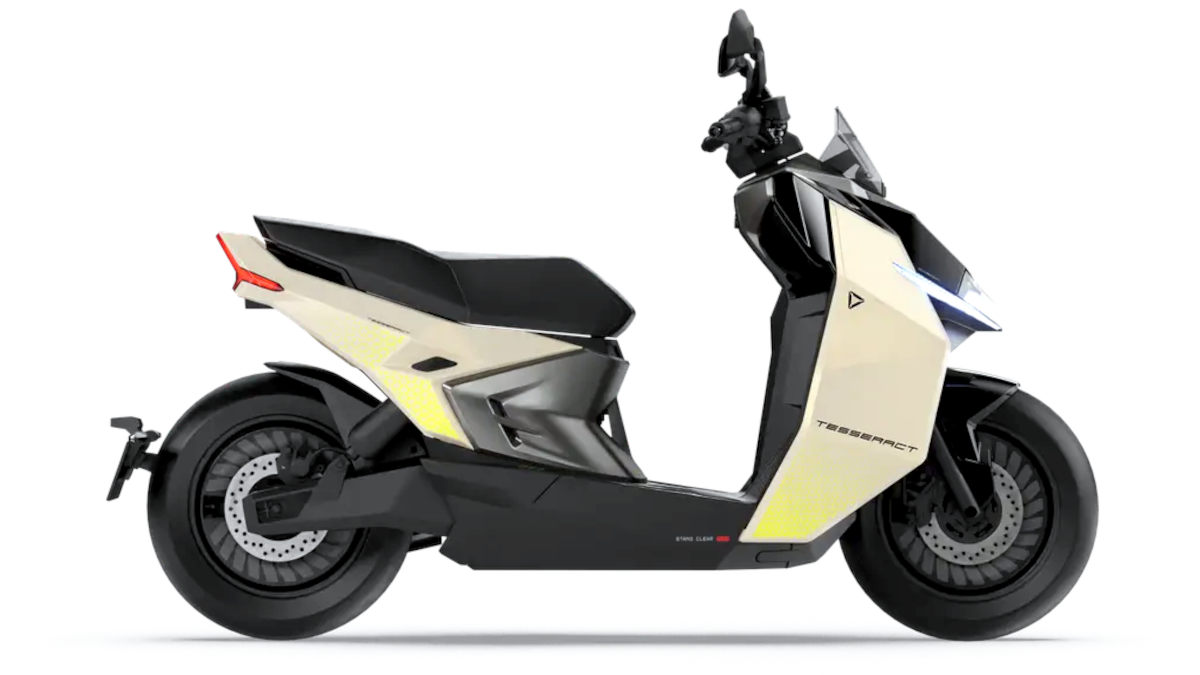
Waiting over a year for a highly anticipated vehicle delivery can easily test any enthusiast's patience. However, Ultraviolette Automotive has broken its silence with an engineering update that completely redefines what an electric scooter can achieve in India. Instead of rushing a compromised product to showrooms, the brand has dramatically re-engineered its flagship platform to deliver unprecedented performance.
The highly talked-about Ultraviolette Tesseract has officially been delayed to January 2027 to implement a massive structural overhaul. The Bengaluru-based startup revealed it has shifted the scooter to India's first-ever 100V electric vehicle architecture. This native higher-voltage platform enables unprecedented thermal and mechanical capabilities, effectively future-proofing the machine against current market configurations.
The 100V Revolution: Going Back to the Drawing Board
Initially, engineering teams faced intense packaging bottlenecks where delivering the promised performance would force massive compromises. Pushing a high 15kW peak power through a standard low-voltage setup would generate exponential heat, causing extreme thermal throttling. To prevent this, engineers either had to drop the 30-liter boot space or reduce the power output down to 10kW.
Instead of detuning the motor or ruining daily utility, Ultraviolette chose to revisit core elements of the powertrain from scratch. The shift to a 100V setup allows the scooter to drastically reduce electrical resistance losses while maintaining continuous peak power. This hardware upgrade completely redesigns critical subsystems, including a far more compact motor controller and an integrated master electronics suite.
Key Features & Design Upgrades: Refined by Real Riders
Beyond the invisible engineering under the skin, Ultraviolette used a multi-city public showcase across 30 cities to gather direct consumer feedback. This focus-group data led to tangible, real-world changes in ride comfort and overall daily utility. The production-ready Tesseract will now feature a heavily redesigned, wider seat that is remarkably friendlier for shorter riders trying to reach the ground.
Additionally, the internal chassis layout has been tweaked to free up increased floorboard space for better legroom. The front windscreen has also been raised to a more functional position to optimize aerodynamic wind deflection over long highway journeys. These subtle styling tweaks ensure the handsome maxi-scooter silhouette looks sharper while performing significantly better.
- Massive Utility Storage: The scooter preserves its highly practical 34-liter under-seat storage along with options for 12-liter side panniers.
- Cutting-Edge Safety: Premium riding aids like dual-channel ABS, traction control, and even radar-based safety tech will come standard.
- Advanced Smart Cockpit: A large 7-inch touchscreen instrument cluster handles seamless onboard navigation and front/rear dashcam feeds.
Specifications: Groundbreaking Power, Battery Packs, and Range
Moving to a native 100V electrical setup unlocks extreme continuous performance without triggering forced thermal software shutdowns. The upgraded Tesseract powertrain outputs a massive 15 kW (20.11 bhp) of peak power, which stands at an incredible three times higher than the industry average. Development prototypes have already touched an indicated 130 kmph, though the final production models will be electronically limited to a blazing 125 kmph top speed.
To give buyers flexible choices, the electric scooter will offer three distinct lithium-ion battery pack capacities. The lineup includes a base 3.5 kWh variant, a mid-tier 5 kWh model, and a flagship 6 kWh pack. The top-tier 6 kWh battery variant safely promises a highly impressive driving range of up to 261 kilometers on a single charge.
- Lightning-Fast Charging: Benefiting from high-voltage efficiency, the Tesseract natively supports dual-rate inputs that enable charging speeds twice as fast as current premium rivals.
- Robust Wheel Setup: The scooter rides firmly on large 14-inch alloy wheels paired with long-travel suspension to easily absorb harsh, unpredictable Indian road conditions.
- Drag Race King: Official testing videos show the Tesseract comprehensively beating every single locally manufactured petrol scooter and premium 150cc-200cc motorcycles in straight-line acceleration.
Pricing and Market Launch Timelines
For the 70,000-plus buyers currently holding reservations, the official market launch and consumer deliveries are now securely locked for Q1 2027. In an admirable move, Ultraviolette has confirmed it will strictly honor the originally promised introductory pricing of Rs 1.45 Lakh (ex-showroom) for the first 50,000 bookings. This ensures early reservation holders are fully protected from the increased development costs.
Anyone reserving a unit beyond that initial 50,000-window should expect a marginal price increase when order books officially adjust. The company is simultaneously expanding its manufacturing footprint, utilizing a facility supporting 5,000 vehicles a month alongside plans for a larger assembly plant to manage the massive influx of orders.
AkulRide Verdict: Is the Tesseract Wait Truly Worth It?
A further delay is undoubtedly a bitter pill to swallow for the thousands of eager reservation holders across India. However, transforming a standard low-voltage commuter layout into a 100V high-performance machine completely justifies the extra engineering wait. Ultraviolette's refusal to launch a watered-down product shows their absolute commitment to the brand's performance DNA.
If Ultraviolette flawlessly delivers on this 15kW performance promise without sacrificing utility, the Tesseract won't just compete with electric scooters; it will comfortably embarrass mainstream petrol motorcycles. For riders who want absolute state-of-the-art performance and are willing to wait, this machine is shaping up to be the ultimate game-changer.
User Discussion