


Waymo’s Driverless Ride Service Now Covers 13 Cities

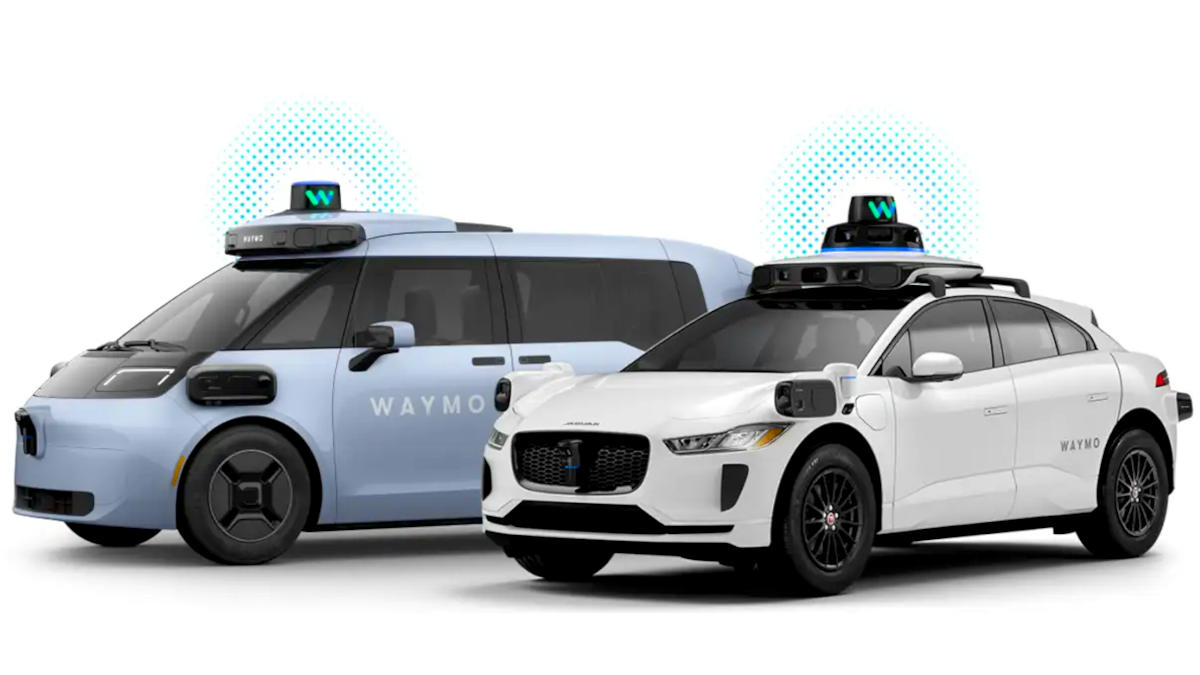
Waymo’s driverless ride-hailing service is moving beyond the limited pilot stage, with fully autonomous rides now available to the public across multiple U.S. cities and Waymo also listing upcoming expansion in the U.S., Japan and the UK. For consumers, the significance is straightforward: Waymo is no longer presenting autonomous driving purely as a future technology, but as a ride service people can already use without a human driver in the front seat.
The company says its public service is available 24 hours a day, seven days a week, while its Waymo Driver autonomous system has accumulated more than 200 million miles of fully autonomous experience on public roads. The scale of the service makes Waymo one of the clearest examples of how driverless technology is being turned into an everyday transportation product.
What Is Waymo’s Driverless Ride Service?
Waymo operates a public autonomous ride-hailing service through its Waymo app. Unlike conventional ride-hailing, the vehicle is driven by Waymo’s autonomous driving technology rather than a human driver, and the company says there is no human driver in the front seat.
The service is designed around a relatively simple customer experience. A rider requests a vehicle through the app, receives the trip information and then travels to the destination while the Waymo Driver handles the driving task.
Waymo describes this as a fully autonomous service rather than an assisted-driving system. That distinction is important because many consumer vehicles currently sold with advanced driver-assistance features still require the driver to remain responsible for the vehicle.
Where Can You Ride in a Waymo?
Waymo's current service footprint spans a growing group of U.S. markets. Its official rides information lists active service in cities and regions including:
- San Francisco Bay Area
- Los Angeles
- Phoenix
- San Diego
- Denver
- Dallas
- Houston
- San Antonio
- Miami
- Nashville
- Orlando
- Tampa
- Austin and Atlanta through its Uber partnership
The exact service area is not necessarily the entire metropolitan region. Waymo operates within defined service territories, so being in one of these cities does not automatically mean every road or neighborhood is covered.
The company also identifies additional markets as upcoming, including New York, Chicago, Seattle, Washington, D.C., Las Vegas, London and Tokyo. An upcoming-city listing should not be interpreted as confirmation that commercial rides are already available there.
How Does a Waymo Ride Work?
The most important difference is what happens after the passenger enters the vehicle. The Waymo Driver is responsible for navigating the route and responding to the surrounding road environment without a human sitting behind the wheel.
Waymo's own demonstrations show the system dealing with scenarios such as red-light runners, emergency vehicles, pedestrians and other complex road situations. These examples illustrate the type of driving environment the company is designing its autonomous system to handle.
For riders, the experience is deliberately closer to conventional ride-hailing than to a technology demonstration. The objective is to make autonomous driving largely invisible as a technical process while giving passengers a normal point-to-point transportation service.
Waymo Driver: The Technology Behind the Service
The core technology is called the Waymo Driver. Rather than treating autonomous driving as a single vehicle feature, Waymo is building a driving system that can be integrated into different vehicle platforms.
The company currently says riders have access to all-electric Jaguar I-PACE vehicles equipped with the fifth-generation Waymo Driver. It is also beginning to introduce the Ojai, which uses the sixth-generation Waymo Driver.
The Ojai rollout is currently associated with Phoenix, Los Angeles and San Francisco, with Waymo saying additional cities will follow.
This approach is strategically important. The long-term value of an autonomous ride-hailing company depends not only on making one self-driving vehicle work, but on being able to deploy the underlying driving technology across larger fleets and different operating environments.
How Many People Can Ride?
Waymo says its current vehicles can accommodate up to four riders, with passengers able to use any seat except the driver's seat.
The company also provides specific guidance for children. Passengers aged 17 and under can ride as guests, while children under eight require an appropriate car or booster seat and cannot sit in the front.
In Metro Phoenix, Waymo also offers teen accounts for riders aged 14 to 17 with parental permission.
Waymo Ride Pricing
Waymo does not publish one universal fare because the cost depends on the individual trip. Instead, the company says riders see the trip cost before booking.
The price is based on the most direct route, and Waymo says the fare does not change if the vehicle subsequently needs to reroute or adapt its route during that trip.
Prices can be higher during periods of stronger demand, such as nights and weekends. That means the absence of a human driver does not translate into a fixed or universally cheaper ride price.
Safety Is the Bigger Story
Safety is central to Waymo's argument for autonomous transportation. On its current website, the company reports more than a 92% reduction in reported serious-injury-or-worse crash rates compared with its human-driver benchmark in areas where it operates.
Waymo's broader safety information also reports 94% fewer serious-injury-or-worse crashes, 82% fewer injury-causing crashes and 82% fewer crashes involving airbag deployment compared with its stated human-driver comparison.
These are Waymo's reported results, not an independent safety rating or a universal guarantee of future performance. The comparison methodology and operating conditions matter when interpreting any autonomous-driving safety statistic.
More Than 20 Million Rides
Waymo says its service has now delivered more than 20 million rides, alongside a reported 93% rider satisfaction rate based on four- and five-star ratings.
That matters because autonomous driving is ultimately a service problem as much as a technology problem. A system can navigate roads successfully, but a commercial service also has to provide reliable pickup, understandable pricing, comfortable vehicles and an experience that passengers are willing to use repeatedly.
Waymo's growing ride count provides evidence that the company is testing that broader proposition in real-world commercial operation rather than relying solely on controlled demonstrations.
What Remains Unknown?
Waymo's public website does not provide a universal price comparison against conventional ride-hailing services, nor does it establish that autonomous rides will always cost less than human-driven alternatives.
The company also does not indicate that every listed upcoming city is already commercially available. Service areas, launch timing and availability can change as Waymo expands.
For consumers outside the company's current operating regions, including India, there is no confirmation on the supplied source of a commercial Waymo ride service launch.
Why Waymo Matters for the Future of Mobility
The important development is not simply that a car can drive without a human. It is that autonomous driving is being packaged as a repeatable transportation service.
Waymo's model shifts the consumer relationship away from buying a self-driving car and toward requesting autonomous transportation when it is needed. If the company can continue expanding its operating areas while maintaining safety, reliability and customer satisfaction, that model could have implications well beyond the vehicles themselves.
For now, however, Waymo remains geographically limited. Its technology may be highly capable, but autonomous driving still depends on regulatory approvals, mapped and supported operating areas, fleet availability and the ability to scale safely.
AkulRide Verdict
Waymo's driverless ride service is significant because it has moved autonomous driving from a futuristic vehicle feature into a commercially available transportation service.
The combination of fully autonomous operation, 24/7 availability, millions of completed rides and expansion into additional cities makes Waymo one of the most tangible examples of driverless mobility currently available to consumers.
The bigger test now is scale. Waymo needs to demonstrate that the same combination of safety, reliability and customer acceptance can be maintained as the service expands into more cities and increasingly complex environments. For the automotive industry, that makes Waymo worth watching not simply as a self-driving technology company, but as a potential new model for how people may access transportation.
TAGS & TOPICS:
#Waymo #Waymo Driver #Driverless Cars #Autonomous Vehicles #Robotaxi #Self Driving Cars #Ride Hailing #Autonomous MobilityWas this helpful?
Rate this story to help us improve
User Discussion