



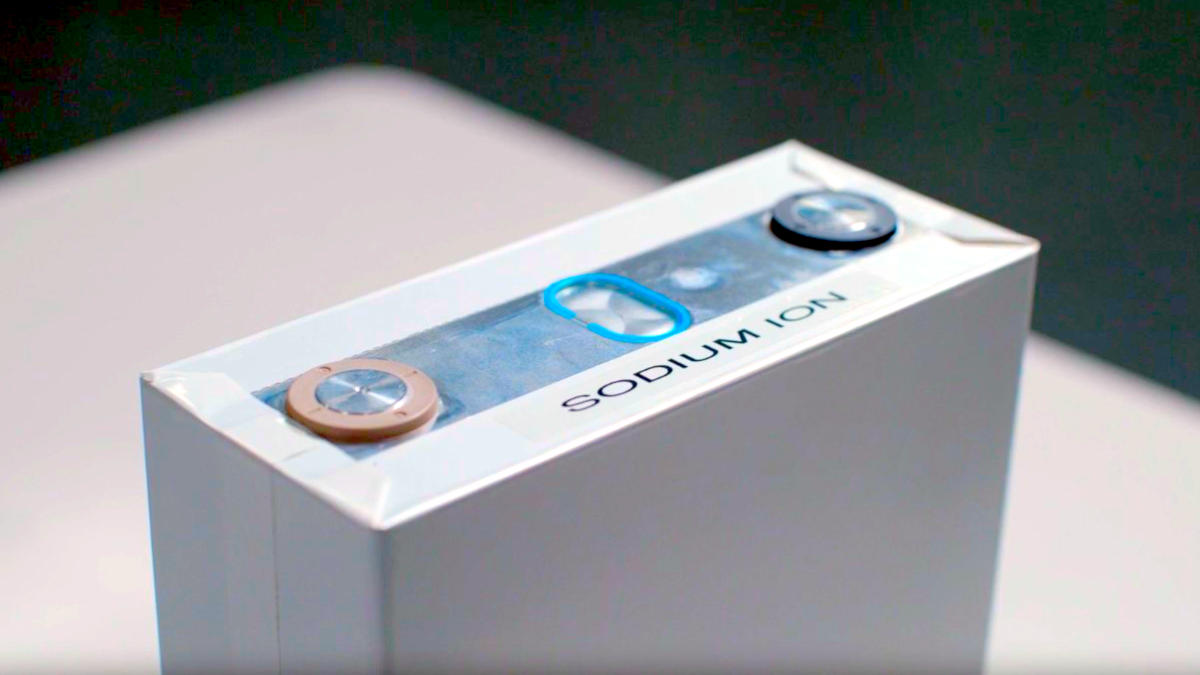
The global battery race just took an unexpected turn as a major American automaker decides to look way beyond the world of passenger electric cars. General Motors has officially announced a massive strategic partnership with energy startup Peak Energy to develop next-generation sodium-ion battery cells.
Instead of powering your next electric SUV, these revolutionary, lithium-free cells are destined to anchor massive grid-scale energy storage systems. For tech enthusiasts and car buyers alike, this shift marks the beginning of a cheaper, highly secure energy ecosystem that could indirectly lower future EV ownership costs.
Ditching Lithium: Why Sodium is the Future of the Grid
As massive artificial intelligence data centers and localized power grids push electricity demand to its absolute limits, standard lithium-ion infrastructure is struggling to keep pace. General Motors is systematically addressing this bottleneck by moving toward sodium-ion chemistry, utilizing abundant raw materials like salt, iron, and manganese.
By completely eliminating volatile and scarce minerals like lithium, cobalt, and nickel, GM bypasses highly vulnerable supply chains that are overwhelmingly dominated by overseas competitors. This pivot ensures a fully American-made, incredibly stable energy infrastructure designed to support the next era of heavy computing and smart charging.
Key Features and Technical Specifications
While sodium-ion batteries aren't quite ready to package into compact passenger vehicles due to lower raw energy density, they provide unparalleled advantages for stationary storage blocks. GM will co-develop these advanced cells at its high-tech Battery Cell Development Center in Warren, Michigan.
- Chemistry Type: Advanced Sodium-Ion (utilizing safe polyanionic materials instead of lithium oxides).
- Energy Density: Rated around 120 to 160 Wh/kg, making weight less important for static setups.
- Thermal Advantage: Exceptional high-temperature tolerance allowing for 100% passive cooling systems.
- Efficiency Boost: Eliminates active liquid cooling loops, reducing system energy waste by nearly 20%.
- Target Trial Production: Scheduled to begin trial manufacturing runs by 2028.
Pricing, Logistics, and Market Launch Details
By executing a strategic investment via GM Ventures into Peak Energy, the automaker secures exclusive domestic manufacturing rights for the co-developed cells. Peak Energy will then integrate these robust cells into their proprietary, modular energy storage systems for commercial utilities.
Because these setups require absolutely zero complex, liquid-cooled infrastructure, they slash setup CAPEX and ongoing maintenance costs by roughly 20 percent compared to standard lithium iron phosphate (LFP) boxes. Commercial implementation trials are already progressing rapidly, paving the way for full-scale utility deployment before the end of the decade.
AkulRide Verdict: Is It a Game-Changer?
General Motors is brilliantly taking a page straight out of Tesla's energy playbook, turning its massive battery R&D capabilities into a multi-billion-dollar utility business. While the lower energy density keeps this tech out of everyday street cars for now, the system-level cost reductions are a massive triumph.
By cleaning up the grid and perfecting alternative chemistries right here in the U.S., GM is building a resilient energy framework. This is a monumental win for long-duration energy storage, proving that the right chemistry always depends entirely on the right application.
User Discussion