


General Motors has announced its upcoming fourth-generation electric vehicle platform, developed to target the automotive market's largest high-volume segments. Engineered with an emphasis on speed, structural simplicity, and cost efficiency, the platform introduces the industry's first production lithium manganese rich (LMR) battery chemistry alongside overhauled digital and propulsion systems.
The program is built around a new engineering operating system that shifts away from sequential vehicle development. By moving designers, engineers, and manufacturing teams to concurrent problem-solving workflows, GM aims to cut the traditional five-year vehicle development timeline in half. Virtual modeling played a central role in this process, allowing engineers to test over 300,000 battery designs before producing a single physical prototype and progressing from battery concept to program approval in one month.
GM is positioning the architecture to serve core segments where affordability, driving range, and durability are primary considerations. The integrated design approach coordinates battery design, motors, and vehicle aerodynamics as a single unified system, which GM claims yields roughly 20 percent more driving range for every kilowatt-hour of energy consumed compared to its current vehicles.
Exterior Styling, Platform and Dimensions
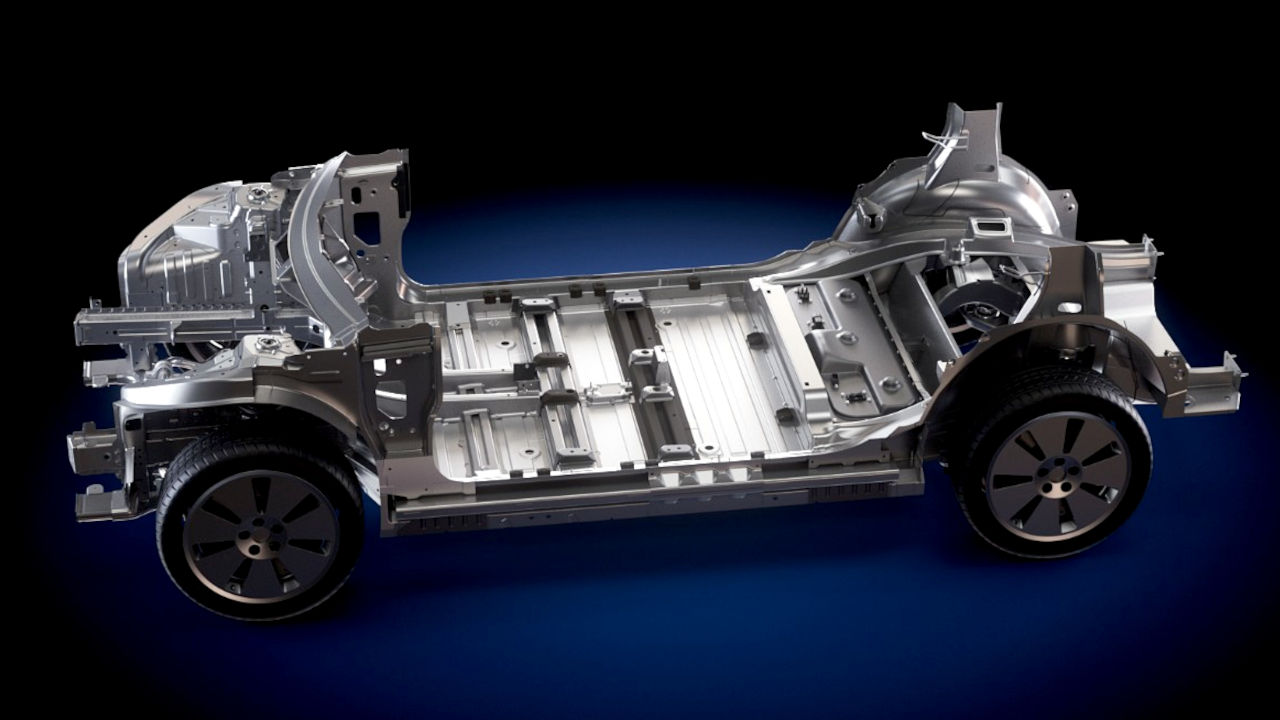
The fourth-generation EV platform focuses heavily on structural efficiency, weight reduction, and aerodynamic optimization. Under GM's updated engineering strategy, mass and aerodynamic gains are integrated directly into structural engineering, allowing for lighter components, smaller motors, and stronger overall frames without adding excess bulk.
Exterior dimensions, specific body styles, and detailed design aesthetics were not disclosed in the announcement, as the modular platform is engineered to underpin diverse high-volume models. However, packaging improvements from consolidated propulsion units directly influence structural dimensions, freeing up physical space throughout the architecture.
Powertrain, Performance and Specifications
Propulsion for the fourth-generation platform comes from a redesigned family of electric motors and power electronics. GM has reduced the number of individual parts inside each drive unit by 40 percent, yielding a smaller, lighter powertrain that simultaneously reduces production overhead and vehicle mass.
Energy storage relies on prismatic LMR battery cells manufactured through the Ultium Cells joint venture between GM and LG Energy Solution in Spring Hill, Tennessee. The LMR chemistry offers 33 percent higher energy density than standard lithium iron phosphate (LFP) chemistry while maintaining a competitive cost profile comparable to LFP. Exact motor outputs, torque figures, charging speeds, battery capacities, and acceleration times were not disclosed.
| Component / Metric | Fourth-Generation Platform Details |
|---|---|
| Battery Chemistry | Lithium Manganese Rich (LMR) |
| Cell Form Factor | Prismatic cells (Ultium Cells / Spring Hill, TN) |
| Energy Density Advantage | 33% higher energy density than LFP chemistry |
| Efficiency Gain | Roughly 20% more range per kWh vs. current GM EVs |
| Drive Unit Complexity | 40% fewer parts per drive unit |
| Electrical Architecture | 30% less wiring with centralized computing |
| Computing Power | 40x processing power for AI-enabled features |
Cabin, Infotainment and Interior Technology
Cabin roominess benefits directly from the downsized drive units, allowing GM to allocate more physical space for passengers and cargo capacity. Specific interior styling, seating arrangements, and screen sizes were not detailed in the announcement.
Technological operations are run by GM's new centralized compute and electrical architecture, which eliminates redundant control modules and cuts total vehicle wiring by 30 percent compared to current models. The Central Compute Unit (CCU) supplies 40 times more processing capacity for artificial intelligence features, driving faster responses for in-cabin displays, voice recognition commands, smarter energy management, and over-the-air updates for OnStar services.
Trims, Safety Suite and Availability
Advanced driver assistance will be anchored by an updated version of GM's Super Cruise hands-free driving system, supported by the expanded processing capabilities of the CCU. Specific trim levels, standalone safety packages, retail pricing, and formal market delivery dates were not confirmed in the release.
Manufacturing execution will rely on GM's PlantBrAIn factory intelligence system, which pairs real-time factory data with digital simulation models across stamping, casting, welding, painting, and assembly. This operational workflow has already accelerated battery-pack assembly times by 30 percent. In addition, fourth-generation vehicles will self-test their own electrical connections while moving along the assembly line, removing the need for a final post-assembly electrical validation inspection.
AkulRide Verdict
GM's fourth-generation platform demonstrates a calculated shift toward manufacturing discipline, software centralization, and cost reduction. By commercializing LMR prismatic cells with 33 percent greater energy density than LFP, GM directly addresses the industry-wide challenge of balancing range, weight, and battery costs in mass-market electric vehicles.
The success of the platform will ultimately hinge on GM's execution of its centralized computing architecture and how quickly these engineering efficiencies translate into competitively priced showroom models for everyday buyers.



User Discussion