


Stellantis, London-based embodied artificial intelligence developer Wayve, and computing giant NVIDIA have officially announced a strategic collaboration alongside the French Government. Revealed at the Assises du Véhicule Autonome in Paris, the joint effort focuses on advancing the safe and responsible deployment of autonomous vehicles across France and accelerating autonomous driving technology across the European Union.
The initiative establishes an end-to-end framework encompassing the full autonomous vehicle value chain, linking silicon architecture, artificial intelligence software, and automotive vehicle manufacturing. Host to one of the largest ride-hailing markets in Europe, France provides the operational backdrop for this program, supported by a broader national push toward artificial intelligence development that saw 109 billion euros in AI investments announced in 2025 at the AI Action Summit in Paris.
By collaborating directly with French authorities, city leaders, and transport unions, the coalition plans to build an operational ecosystem that balances rapid technical evolution with regulatory safety and data sovereignty standards.
Platform Architecture and Technical Integration
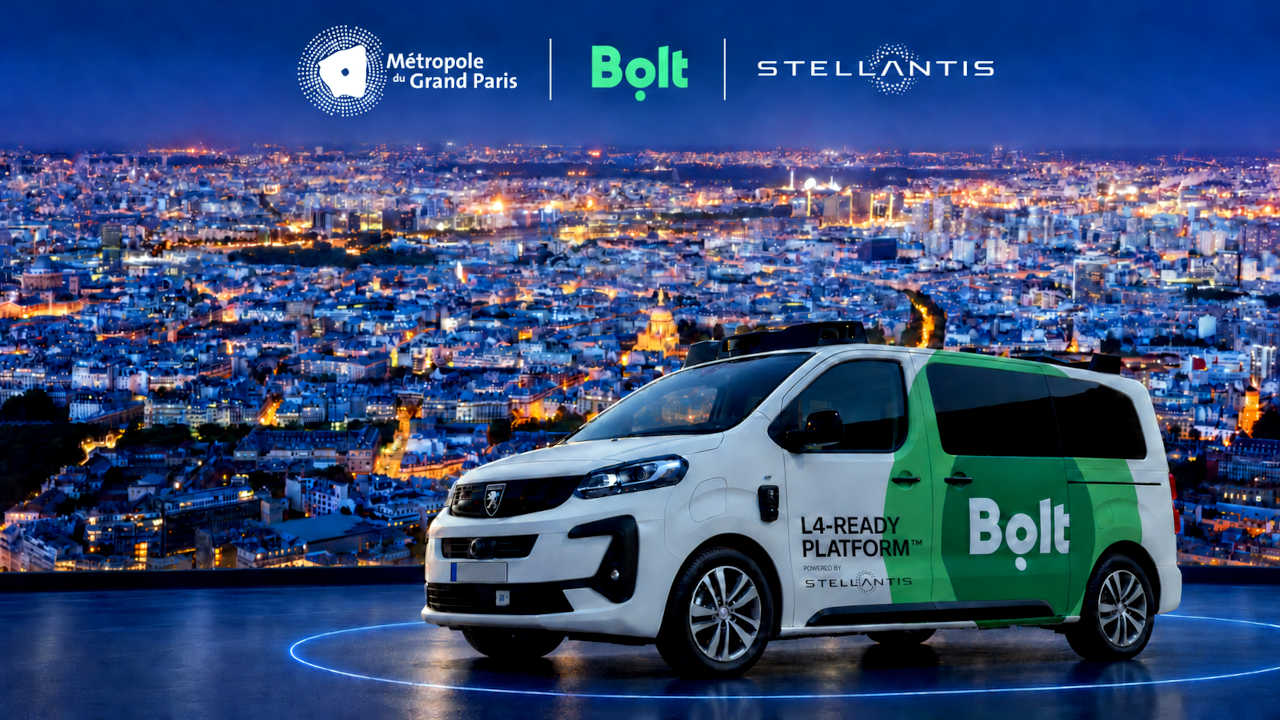
Rather than developing a single bespoke passenger vehicle body, the program is anchored by Stellantis L4-Ready Platforms. These platforms are engineered specifically to accommodate Level 4 automated driving systems, offering the baseline mechanical, structural, and electrical foundations necessary for driverless operations. Specific dimensional metrics such as exterior length, track width, wheelbase, and total vehicle curb weight were not disclosed in the official announcement.
Exterior sensing and hardware integration rely on NVIDIA Hyperion, an end-to-end compute and sensor architecture designed to interface with high-level vehicle automated driving software. The physical integration pairs Stellantis automotive engineering and volume vehicle manufacturing capabilities with the compute requirements of embodied artificial intelligence, providing the structural base needed to scale deployments beyond closed-circuit testing.
Powertrain, Compute, and System Specifications
Specific mechanical propulsion details, including horsepower, torque ratings, battery pack capacities, zero-to-100 km/h acceleration figures, and electric driving range, were not disclosed by the consortium. Instead, technical performance focuses heavily on computational capacity and algorithmic processing power necessary for real-world automated navigation.
The system brings together the Wayve AI Driver software, the NVIDIA Halos operating system, and NVIDIA Hyperion hardware architecture. Below is a breakdown of the confirmed core system elements announced for the deployment program:
| System Layer | Technology Component | Primary Operational Role |
|---|---|---|
| Vehicle Architecture | Stellantis L4-Ready Platforms | Automotive chassis, mechanical systems, and factory manufacturing |
| Compute and Sensor Rig | NVIDIA Hyperion | High-performance compute modules and sensor interface architecture |
| Operating Platform | NVIDIA Halos OS | Core operating software linking physical compute to machine learning models |
| Autonomous Driver | Wayve AI Driver | Embodied AI system responsible for automated vehicle motion and decision-making |
Interior Architecture and Operational Technology
Detailed passenger cabin amenities, seating materials, infotainment screen sizes, and cargo volume specifications were not detailed in the release. The primary focus inside the cabin revolves around automated mobility management, ride-hailing support, and autonomous fleet functionality.
Central to the cabin and mobility ecosystem is the Wayve AI Driver. Designed to process complex driving scenarios through embodied artificial intelligence, the software acts as the primary virtual operator. Local French partners tasked with actual transport operations will manage passenger operations, transit interfaces, and frontline operational engagement to ensure mobility access benefits riders, local communities, and transit workers alike.
Deployment Timeline, Trims, and Safety Framework
Consumer trim levels, vehicle purchase prices, and individual buyer warranties were not announced, as the current initiative centers on autonomous fleet infrastructure and automated transport networks. Dedicated commercial roll-out dates and specific operational delivery targets were not disclosed.
Safety and regulatory compliance represent key pillars of the joint project. French Minister of Transports Philippe Tabarot emphasized that France is committed to updating its regulatory frameworks to advance autonomous mobility while maintaining strict safety standards and national data sovereignty. By engaging early with city authorities, trade unions, and mobility operators, the initiative seeks to transition automated driving safely from controlled trials into real-world French transport systems.
AkulRide Verdict
The alliance between Stellantis, Wayve, and NVIDIA represents a well-rounded approach to industrializing Level 4 autonomy in Europe. By aligning vehicle manufacturing scale, modern compute infrastructure, and embodied AI software with explicit government backing, the partners address both regulatory and technical roadblocks. While concrete details on vehicle models, consumer availability, and roll-out timelines remain under wraps, this partnership establishes a robust foundational framework for commercial autonomous transit across France and the broader European continent.



User Discussion