


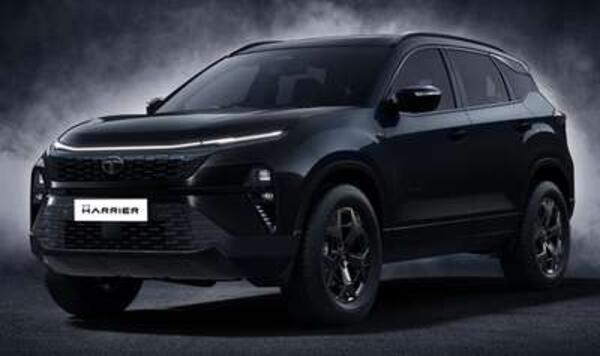
Tata Passenger Electric Mobility has officially extended its Battery-as-a-Service financing program across its entire passenger electric vehicle lineup, reducing upfront acquisition prices by up to Rs 7.30 lakh. Previously restricted to entry-level offerings, the dual-loan ownership program now covers all six models in the portfolio, including the Nexon.ev, Curvv.ev, Sierra.ev, and Harrier.ev.
The strategic move directly addresses the initial purchase price gap that frequently deters mainstream car buyers from making the leap from internal combustion engines to electric propulsion. By separating the vehicle body cost from the high-voltage battery pack, Tata is aiming to preserve its market dominance while offering buyers alternative financial pathways to zero-emission mobility.
What Has Tata Announced?
Under the revised sales structure, every electric passenger car sold by Tata can now be purchased through the Battery-as-a-Service model, commonly known as BaaS. The scheme was initially introduced on the Tiago.ev and Punch.ev, but customer demand for flexible financing prompted the automaker to roll it out to its larger and higher-capacity models.
Traditional outright purchasing remains fully operational for customers who prefer to own both the vehicle and the battery pack outright under a single invoice. According to Vivek Srivatsa, Chief Commercial Officer at TATA.ev, the expanded initiative is designed to give consumers complete freedom to evaluate conventional ownership against battery subscription arrangements with complete transparency.
How the Dual-Loan BaaS Structure Works
Rather than functioning as a pure battery rental model where the battery is owned by an external fleet entity indefinitely, Tata's BaaS framework operates as a dual-loan financial product. When opting for BaaS, the buyer enters into two distinct loan agreements arranged through partner financial institutions:
- Vehicle Body Loan: Financed as a standard automobile loan covering the glider, motor, electronics, and cabin at a sharply discounted upfront ex-showroom price.
- Battery Financing Loan: Handled through a secondary dedicated loan account, with monthly payments determined by battery capacity, upfront down payment, and chosen tenure.
To assist consumers in estimating their operational expenses, Tata has translated the battery financing cost into an indicative per-kilometre rate based on typical daily usage patterns. However, the company explicitly notes that these per-kilometre battery figures exclude home charging electricity costs, public charging fees, general vehicle maintenance, comprehensive insurance, registration charges, and applicable road taxes.
Model-Wise Price Reductions and Battery Rates
The upfront price reduction varies significantly depending on the physical size and kilowatt-hour capacity of the underlying battery pack. The largest monetary drop occurs on the flagship Harrier.ev, where the entry-level acquisition cost falls by Rs 7.30 lakh.
- Tata Tiago.ev (19 kWh): Standard price starts at Rs 6.99 lakh. Under BaaS, the vehicle price drops to Rs 4.69 lakh, representing an upfront saving of Rs 2.30 lakh with a battery usage rate of Rs 2.6 per km (calculated on 44 km daily running).
- Tata Punch.ev (30 kWh): Standard price starts at Rs 9.79 lakh. The BaaS entry price is Rs 6.59 lakh, delivering an upfront saving of Rs 3.20 lakh alongside a battery usage rate of Rs 2.6 per km (calculated on 60 km daily running).
- Tata Nexon.ev (45 kWh): Standard price starts at Rs 14.34 lakh. With BaaS, the initial vehicle price falls below nine lakh to Rs 8.99 lakh, saving Rs 5.35 lakh upfront with a battery financing rate of Rs 4.4 per km.
- Tata Curvv.ev (55 kWh): Standard price starts at Rs 17.19 lakh. The BaaS starting price sits at Rs 10.99 lakh, reducing upfront costs by Rs 6.20 lakh with a battery financing cost of Rs 5.0 per km.
- Tata Sierra.ev (63 kWh): Standard price starts at Rs 18.79 lakh. Under the BaaS program, it begins at Rs 11.99 lakh, creating an upfront saving of Rs 6.80 lakh with a usage fee of Rs 5.5 per km.
- Tata Harrier.ev (65 kWh): Standard price starts at Rs 21.79 lakh. The BaaS starting sticker is pegged at Rs 14.49 lakh, reflecting an upfront reduction of Rs 7.30 lakh with a battery usage cost of Rs 5.9 per km.
All prices quoted reflect ex-showroom figures for base trims. Quoted usage costs for models from the Punch.ev upward assume a standard average distance of 60 kilometres per day.
Financing Terms and Customer Eligibility
Tata has partnered with several prominent non-banking financial companies and commercial banks to underwrite the dual-loan architecture. Because the arrangement involves two concurrent credit lines, final approval and interest rates remain subject to individual financial assessment and credit score verification.
The program is currently available strictly to individual personal buyers, with commercial and fleet operators explicitly excluded from the retail BaaS price list.
Why It Matters for Buyers
For prospective electric car buyers, the psychological barrier to EV adoption has almost always been the initial price premium compared to equivalent petrol or diesel cars. By unbundling the battery, Tata brings the showroom entry price of vehicles like the Nexon.ev and Curvv.ev into direct parity with mid-spec internal combustion alternatives.
Buyers who have available monthly cash flow but lack the lump-sum capital required for large down payments can now access higher-segment vehicles with lower initial out-of-pocket costs. Furthermore, it allows shoppers to cross-shop Tata against competing electric offerings from rival brands that have aggressively promoted battery-rental schemes in recent months.
What Remains Unknown
While the upfront sticker reductions appear compelling on paper, several critical ownership questions remain to be clarified through dealership documentation:
- Lifetime Total Cost of Ownership: Because the arrangement involves financing two separate loans, the cumulative interest paid across both tenures could make the overall expenditure higher than an outright single-loan purchase over five to seven years.
- Resale and Transfer Procedures: Tata has not yet detailed how secondary market sales will function if an owner chooses to sell the car before the battery financing tenure has concluded.
- Minimum Running Penalties: Details regarding whether drivers face financial penalties if their monthly mileage falls well below or surges far above the assumed 44 km or 60 km daily baseline remain subject to specific financier contracts.
AkulRide Verdict
Expanding Battery-as-a-Service across its entire six-model portfolio is a decisive defensive and offensive maneuver by Tata. As competition in India's electric passenger car space intensifies, dismantling the upfront pricing hurdle gives the company a powerful showroom hook across every budget tier.
However, consumers must approach BaaS with clear financial awareness. While paying Rs 8.99 lakh upfront for a Nexon.ev or Rs 14.49 lakh for a Harrier.ev looks undeniably attractive, buyers must evaluate the dual-loan interest rates and total monthly outflows to ensure the long-term math genuinely works in their favor.


User Discussion