



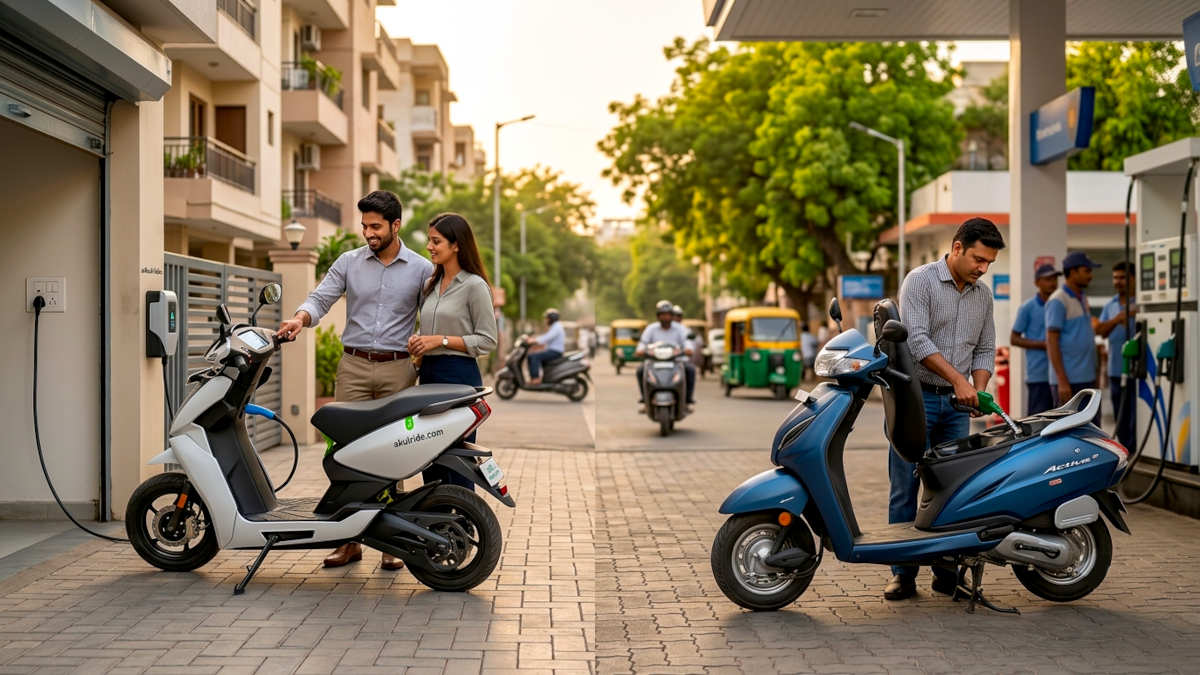
Every time you pull into a petrol pump, your wallet takes a direct hit. With fuel prices refusing to budge and city traffic becoming increasingly gridlocked, finding a smarter way to commute has become an absolute necessity. The big question dominating every showroom floor right now is simple: should you stick with a trusted petrol scooter or take the leap into the electric future?
It is easy to get caught up in flashy marketing campaigns and emotional debates between traditional gearheads and tech-driven EV enthusiasts. To help you cut through the noise, we have put both powertrains through their paces under grueling real-world conditions. Here is the definitive, no-nonsense breakdown of how electric and petrol scooters stack up across every crucial metric.
The Financial Face-Off: Running Costs Exploded
When it comes to daily operating expenses, the math is incredibly one-sided. Traditional petrol scooters are chained to highly volatile oil markets, turning your daily commute into a recurring monthly financial drain. Electric scooters, on the other hand, treat energy consumption like a minor utility bill rather than a major luxury expense.
Petrol Price Pain vs. Pennies Per Unit
A standard 110cc or 125cc petrol scooter will easily consume roughly 2 to 2.5 Rupees worth of fuel for every single kilometer traveled. In stark contrast, a highly optimized electric scooter fully tops up its battery using just 2 to 3 units of domestic electricity. This brings your actual running cost down to a shocking 15 to 20 paise per kilometer, keeping thousands of Rupees in your pocket every single month.
- Petrol Running Cost: Approximately ₹2,000 to ₹2,500 monthly for an average 1,000-kilometer urban commute.
- Electric Running Cost: Roughly ₹150 to ₹200 monthly under identical riding distances and urban traffic conditions.
- The Payback Window: The higher initial purchase price of a premium EV is typically recovered within 18 to 24 months of steady daily use.
Maintenance and Longevity: What Happens After Year Three?
The differences under the body panels are even more extreme than the gaps in fuel costs. Internal combustion engines are highly complex mechanical puzzles packed with hundreds of rapidly moving, high-friction parts. Electric scooters replace that entire intricate ecosystem with a highly compact motor and a streamlined battery pack.
The Beautiful Simplicity of an Electric Drivetrain
With a petrol scooter, your calendar is dictated by regular garage visits for engine oil replacements, air filter cleanings, and spark plug adjustments. Neglecting these chores leads to immediate performance drops and permanent engine damage over time. An electric scooter completely eliminates these volatile variables, requiring virtually no regular powertrain adjustments.
- Zero Engine Vulnerabilities: No complex gearboxes, drive belts, clutches, or pistons to wear down or unexpectedly fail.
- Predictable Upkeep: Your routine maintenance visits are strictly limited to basic checks on brake pads, tire wear, and suspension lubrication.
- The Battery Caveat: While routine maintenance is incredibly cheap, you must budget for a major battery replacement after roughly 5 to 7 years of heavy service.
Daily Usability: Range Freedom vs. Charging Patience
This is where the traditional petrol scooter fights back with its ultimate trump card: absolute logistical freedom. For all their financial advantages, electric vehicles still require a fundamental shift in how you plan your daily journeys. Understanding your personal tolerance for range limits is critical before making your final selection.
The Convenience of the Two-Minute Fuel Stop
If you see your fuel needle dipping into the reserve zone on a petrol scooter, the solution takes less than two minutes at any corner station. This unmatched convenience makes petrol vehicles the undisputed kings for spontaneous long-distance highway road trips or unpredictable emergency runs. Electric vehicles, conversely, require disciplined planning and dedicated overnight patience.
- The Charging Reality: A standard home charger takes anywhere from 4 to 6 hours to completely replenish a depleted battery pack.
- Public Infrastructure Gaps: While fast-charging networks are expanding rapidly in urban centers, remote rural areas still face significant coverage challenges.
- Range Anxiety Factors: Sudden changes in weather, steep flyovers, and carrying heavy pillion passengers can cause real-world EV range to fluctuate unexpectedly.
Performance and Feel: Instant Thrills vs. Top-End Roar
The riding experience between these two platforms could not be more distinct. Petrol scooters provide a familiar, mechanical feedback loop filled with distinct exhaust notes, subtle chassis vibrations, and a gradual buildup of speed. Electric scooters swap that classic mechanical drama for a futuristic, whisper-silent flying machine sensation.
Because electric motors deliver maximum torque the exact millisecond you twist your wrist, their initial acceleration is incredibly aggressive. This makes zipping through tight gaps in stop-and-go city traffic an absolute breeze and highly satisfying. However, traditional petrol options often maintain better top-end stamina and higher sustained cruising speeds on wide, open highways.
The Final Verdict: Which Scooter Belongs in Your Garage?
Choosing the perfect winner depends entirely on your specific daily driving patterns and regional infrastructure. If your daily commute consists of predictable 30 to 50-kilometer city runs and you have access to a secure parking spot with a plug point, an electric scooter is an absolute financial no-brainer.
However, if your lifestyle demands frequent, spontaneous long-distance journeys across rural highways, or if you live in an apartment complex completely lacking charging access, a modern, fuel-efficient petrol scooter remains a highly practical and reliable tool. Evaluate your daily routes carefully, schedule comprehensive test rides for both platforms, and choose the machine that truly matches your lifestyle.
User Discussion