Ride Without a Licence? India's Scooter Rules Decoded


Picture this: you are cruising down a busy street on a brand-new scooter, enjoying the fresh air, when you spot a traffic police checkpoint up ahead. A sudden wave of anxiety hits as you wonder if your paperwork is fully compliant with the latest regulations. Navigating the legal landscape of Indian roads can feel like a minefield, especially with the recent explosion of alternative mobility options.
The rules governing who needs a driving licence—and who is completely exempt—have shifted dramatically over the last few years. While traditional petrol models follow a strict, unchanging legal protocol, the electric vehicle revolution has rewritten the rulebook entirely. Here is the definitive, expert-vetted guide to understanding exactly when you need a licence to ride a scooter in India, and when you can legally slide right past the RTO queues.
The Golden Rule: Petrol vs. Electric Two-Wheelers
To understand whether you need a driving licence, you must first look at what kind of fuel or power source is moving your vehicle. The Indian government treats traditional internal combustion engines and modern battery-powered motors under completely separate regulatory frameworks. This core distinction determines your entire paperwork workload before you can turn the key or press the start button.
Petrol Scooters: Absolute Compliance Required
If you are planning to purchase or ride a traditional petrol-powered scooter, there are absolutely no shortcuts or legal grey areas. Under the Motor Vehicles Act, every single petrol two-wheeler operates under strict RTO oversight, completely regardless of its engine displacement or cubic capacity (cc).
Comparing multiple vehicles before purchasing?
Use our multi-market spec comparison engine to evaluate performance and pricing side-by-side.
- Mandatory Driving Licence: You must possess a valid two-wheeler driving licence (such as the Motorcycle Without Gear or MCWOG category) to ride legally.
- Full RTO Registration: The vehicle must have a valid Registration Certificate (RC) and display standard high-security registration plates (HSRP).
- Strict Age Restrictions: The minimum age to obtain a full two-wheeler driving licence for these standard commercial vehicles is 18 years.
- Compulsory Insurance & PUC: You are legally required to maintain a valid third-party insurance policy and an active Pollution Under Control (PUC) certificate at all times.
Electric Scooters: The Game-Changing Split
This is where the regulatory landscape gets incredibly interesting for the modern Indian commuter. Unlike the petrol segment, the Ministry of Road Transport and Highways divides electric scooters into two entirely distinct legal categories based strictly on their performance capability. This unique classification creates a highly accessible pathway for certain types of riders to legally skip traditional licensing requirements entirely.
The 25 km/h and 250W Rule: When a Licence is NOT Needed
Under the Central Motor Vehicles Rules (CMVR), the Indian government actively encourages micro-mobility and green transportation by offering a sweeping exemption. If an electric scooter stays strictly within specifically defined low-speed and low-power boundaries, it is legally classified as an "electric bicycle" rather than a motor vehicle.
The Legal Exemption Criteria Decoded
To qualify as a non-RTO, licence-free electric scooter, the vehicle must simultaneously meet two rigid technical benchmarks directly from the factory floor. If a model crosses even one of these thresholds by a fraction, the exemption immediately vanishes, and full road-vehicle rules apply.
- Maximum Top Speed: The vehicle's propulsion system must be mechanically or electronically capped at a maximum speed of 25 km/h.
- Maximum Motor Output: The electric motor integrated into the wheel hub or chassis must have a power rating of 250 Watts (0.25 kW) or lower.
The Major Benefits of Low-Speed EVs
Choosing a certified low-speed electric scooter unlocks an incredibly seamless, friction-free ownership experience that cuts out traditional red tape. Anyone aged 16 years or older can legally jump onto these machines and ride away without passing a single RTO driving test, saving considerable time and expense.
- Zero RTO Bureaucracy: You are completely exempt from vehicle registration, road tax payments, and the need to mount a registered number plate.
- Popular 2026 Models: Highly practical choices like the Ola Gig, Yulu Wynn, and Hero Electric Flash LX fit perfectly into this hassle-free segment.
- Zero Insurance Penalties: While carrying a third-party policy is highly recommended to safeguard your asset against theft or damage, it is not legally mandatory.
High-Speed EVs: When the RTO Steps Back In
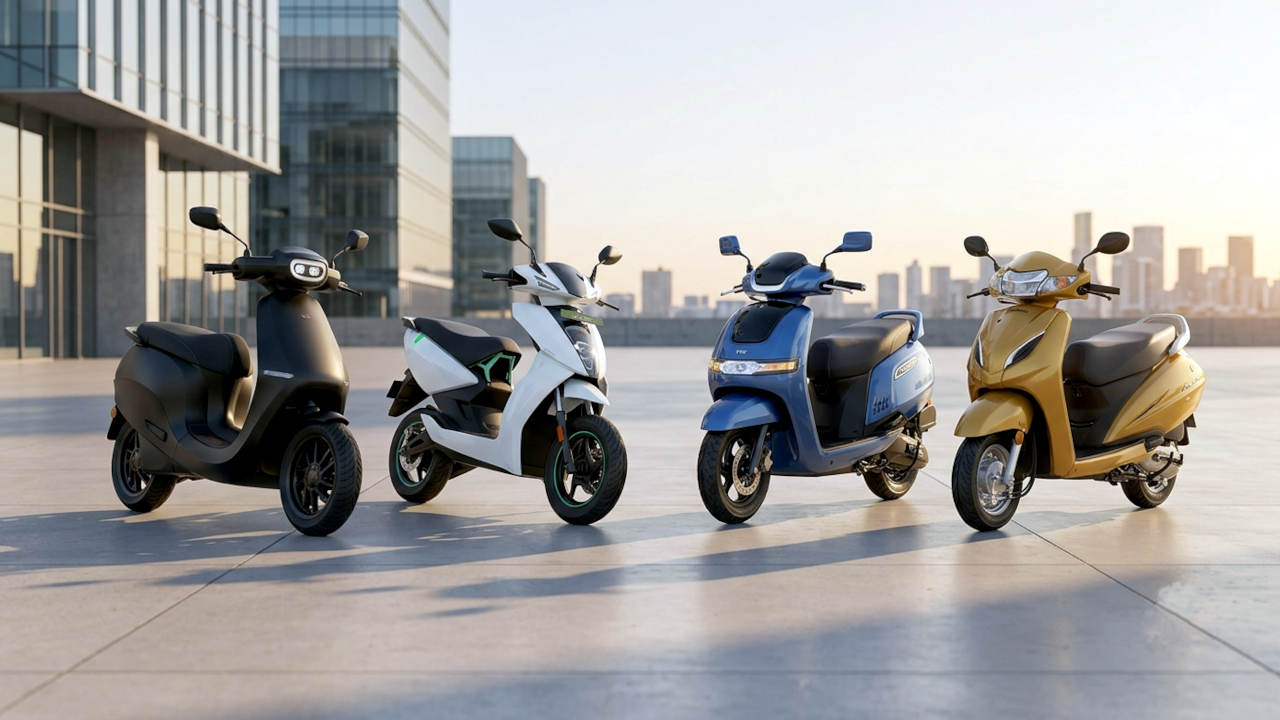
If you want to purchase a mainstream, high-performance electric scooter capable of keeping pace with fast-moving highway traffic, the legal playing field levels out instantly. Models like the Ather 450 series, Ola S1 Pro, TVS iQube, and Bajaj Chetak feature massive battery packs and high-output motors built for serious performance.
Because these advanced machines easily hit top speeds ranging from 45 km/h to well over 90 km/h and push out several kilowatts of peak power, they are treated identically to petrol vehicles. To operate a high-speed electric vehicle legally on public roads, the rider must be at least 18 years old and carry a valid driving licence. The vehicle must be formally registered with the local RTO, sport distinct green number plates, and maintain a valid third-party insurance policy.
Crucial Roadside Checklist: What Documents to Carry
Even if you are riding a low-speed electric scooter that technically exempts you from standard paperwork, traffic police officers may occasionally pull you over to verify your vehicle's specifications. Being prepared with the right documentation ensures a completely stress-free interaction and protects you from wrongful fines.
For Low-Speed (Non-RTO) Electric Scooters
Since your vehicle does not possess a traditional registration certificate or a standard number plate, you should always carry a few core alternative documents inside the under-seat boot storage.
- The Manufacturer's CMVR Certificate: A copy of the official document proving the vehicle's motor is under 250W and capped at 25 km/h.
- The Original Purchase Invoice: Your official dealer receipt showing proof of legitimate ownership and retail purchase.
- A Valid Personal ID: Any standard government-issued identification confirming you meet the minimum riding age of 16 years.
For High-Speed EVs and Petrol Scooters
Riders operating high-speed electric models or any conventional petrol two-wheeler must constantly maintain access to a complete digital or physical compliance folder to avoid hefty penalties during routine traffic checks.
- Valid Driving Licence: An active, unexpired physical card or a verified digital copy via the DigiLocker smartphone app.
- Registration Certificate (RC): Your official RTO document linking the unique chassis number to your personal details.
- Active Motor Insurance: Valid proof of at least third-party insurance coverage to protect against roadside liabilities.
- PUC Certificate (Petrol Only): An updated emissions document, noting that all electric vehicles are completely exempt from pollution testing.
The Final Verdict: Which Category Fits Your Daily Routine?
Deciding whether to buy a scooter that requires a driving licence comes down to a realistic assessment of your typical geographic surroundings and daily travel distances. If you are a college student, a senior citizen, or someone who strictly manages short neighborhood errands, grocery runs, and quiet colony commutes, a low-speed, licence-free electric scooter is an incredibly practical and economical choice.
However, if your lifestyle demands a lengthy daily office commute, navigating fast-moving multi-lane city flyovers, or carrying heavy pillion passengers across town, you absolutely need the sustained power of a high-speed EV or a petrol scooter. Evaluate your travel boundaries carefully, ensure you meet the legal age requirements for your chosen category, and always remember to strap on a certified helmet for a secure, compliant, and enjoyable ride.
Related Research Topics:
Hemant Singh
Automotive Research & Buying SpecialistWas this buying advice helpful?
Rate this guide to help us maintain accurate, unbiased automotive counsel
Vehicles Related to this Guide
Browse All → Mahindra & Mahindra
Mahindra Scorpio N
 Tata Motors
Tata Nexon (2017 - 2023)
 Tata Motors
Community Discussion